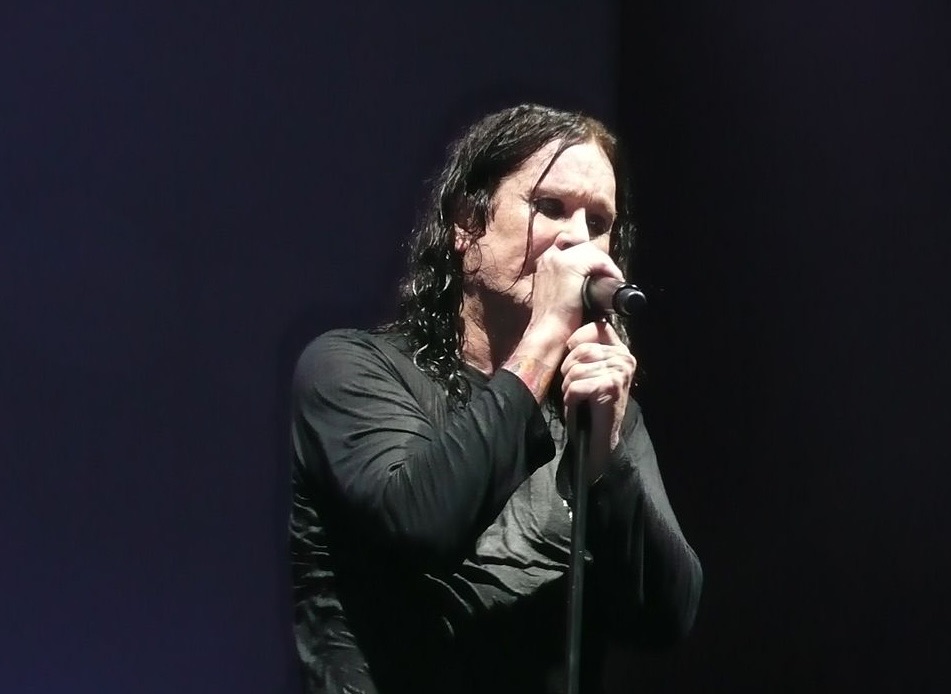
On the 5th of July last year, a man whose doctors had told him the show might kill him took the stage at Villa Park in Birmingham and sang. He was 76, and Parkinson’s had taken his ability to stand for a set, so he rose into view from beneath the stage already seated, on a vast gothic throne carved over with bats and skulls. He had been warned in plain language that the exertion could end him. He did it anyway. Seventeen days later it ended him. That performance, the last Ozzy Osbourne ever gave, might be the most important thing to understand about him, and it explains exactly why the project his family announced in Las Vegas is a mistake, however much love went into it.
A healthy man singing for two hours is a concert. A dying man spending some of the little time he has left in front of a crowd, against medical advice, knowing chemistry is against him, is something else. It is the whole of Ozzy Osbourne compressed into one night: the refusal to be sensible, the appetite for the stage that outran self-preservation, the working pulse staring down the thing that was about to stop it. His wife later said he went out the way a rock star should, and for once the cliche was precise. The meaning of that final show is inseparable from the fact that it was final, and that he knew it might be. This was always the substance of him, long before the end made it literal.


The famous story is the bat, the night in Des Moines in 1982 when he bit the head off a creature he took for a rubber prop and learned, warm and crunching in his mouth, that it was a real animal that had until recently been alive. The bat is the version everybody can repeat at a party. It is also the animal he would die enthroned upon forty-three years later, which is the kind of rhyme a life only earns by being lived all the way to the end.
But the bat is only the comedy on the surface of something the genre always understood more seriously than that. Underneath it ran the addictions that nearly killed him a dozen times before his heart finally did, the collapses, the improbable survivals, the genuine fear, publicly admitted, of the occult material he had spent a career conjuring. He was a man who appeared to be in a slow, public, decades-long argument with his own death, and who kept losing rounds and getting up. That argument was the art. The riffs and the wail were the delivery system. What people actually came for, whether they could say so or not, was the spectacle of a body that should not still have been moving, moving anyway.
He knew this about himself with a clarity that is almost unbearable in hindsight. Years before the end, he told an interviewer that he already knew how his death would be reported, that the headlines would say the man who bit the head off the bat had joined the bat. He was right, and he said it without a trace of bitterness. He understood that his legend was the kind a death completes rather than interrupts, that the story needed the ending to be the story. A man who grasps that about his own life has grasped the one thing metal has always insisted on, which is that the dark at the edge of everything is real and is not negotiable and is, in the end, the point.


So consider what his family has now decided to do about it.
On the 20th of May, on a stage at the Licensing Expo in Las Vegas, Sharon and Jack Osbourne announced that Ozzy is coming back as an interactive avatar, a life-size unit you can stand in front of and speak to, arriving in the United States and the United Kingdom by the end of summer. You will ask it questions and it will answer in his voice. Sharon was admirably direct about the goal. “Elvis died 50 years ago, and everybody knows Elvis,” she said, and she wants the same for Ozzy. You can feel the weight behind it. She buried her husband of forty-three years ten months ago, and she is reaching for the thing every grieving person reaches for, which is some guarantee that the world will not be allowed to forget him, that he will not dwindle into a name. There is nothing cynical in it. It is grief doing what grief does, which is bargain with permanence.
But look closely at what is actually being built, because it is not what Elvis is. Elvis endures because he stopped. The catalogue closed in 1977 and never reopened, and everything that keeps him present, the records, the films, the pilgrimages to Graceland, the impersonators who know they are impersonators, is the careful tending of a finished product. Nobody asks the Graceland gift shop what Elvis would think about the present day, because everyone understands that Elvis is no longer in the business of having thoughts about anything. He is preserved, and preservation is honest about what it is.


The avatar is the opposite of preservation. It is designed not to tend what Ozzy left but to generate what he didn’t. Sharon said you will be able to ask it anything and that “the answers will be what Ozzy would have said,” and that small word, would, carries the entire difference. Not what he said, which exists in abundance, on dozens of records and in a memoir published only last autumn, all of it replayable forever without anyone having to invent a syllable. What he would have said, in conversations he never had, about a world he did not live to see. The company building it describes the result as a living performance rather than a playback, and that is exactly the trouble. The point of the machine is to keep producing Ozzy after the man who was Ozzy has stopped, to make the supply of him inexhaustible. And the supply of him was never the point. The exhaustion was.
This is where the defenders have their strongest move, and it deserves an honest hearing. Every form of remembering, they will say, cheats death a little. A record lets a dead man sing into your kitchen. The biopic the family has in the works will hand his life to a younger actor to live again on screen. A photograph stops an instant he experienced as motion. If all of those are permitted, and they obviously are, why draw the line at a talking unit in a shopping centre? The objection is fair and the answer to it is exact. Every one of those earlier forms is a record of something that happened. The song was sung, the moment occurred, the photograph caught a real face on a real day. They all point backward at a fact and say, this was. The avatar points forward at an invention and says, this would be. A recording is honest that it is a trace. The avatar is engineered so that the line between the trace and the fabrication cannot be seen by the person standing in front of it. That concealment is not a side effect. It is the product. And it is what turns remembering into something else, a difference not of degree but of kind.
The reason it cuts deeper with Ozzy than it would with almost anyone is that the property the avatar strips away is the exact property that made him an artist. A machine that could reproduce his voice and an endless stream of plausible Ozzy sentences would be missing the only thing that ever mattered, which is that the real one was running out of time the entire time, and knew it, and took the stage regardless. You cannot build that into a unit that cannot die. An immortal Prince of Darkness is a contradiction in its own terms, because the title was never about costume or volume. It was about a living man holding the gaze of the thing that ends everyone, on a clock, with a pulse, for as long as the pulse held. Remove the clock and the figure left standing has his face and his voice and nothing of his meaning. It is a karaoke ghost of the one performer whose whole subject was that the ghost is coming for all of us.
There is a reason this lands as more than a passing worry about a gadget, and it has to do with timing that goes well beyond one family. Ozzy Osbourne was among the handful of people who invented this music, in Birmingham, in 1968, and he is now among the first of that founding generation to die. He will not be among the last for long. The men and a few women who built heavy metal are mostly in their seventies now, and over the next decade the genre is going to bury most of them, and it is going to have to decide, estate by estate and band by band, what remembering them is going to mean. The Osbournes are simply first to the question, and they have arrived at it with more money and more attention than anyone behind them will command, which means their answer will not stay theirs. It will become the template the others reach for. And the template they have chosen, born of genuine grief, tilts toward manufacturing the dead rather than honoring them.
The genre does not have to follow them there, and the alternative is not to forget. Metal is the one popular form built from its first notes around the things that cannot be bargained with, and death stands at the head of that list. A music that took mortality seriously enough to make it the center of everything it did owes the people who built it a way of remembering that is equally serious about the fact that they died. That way already exists. It is the records, which are true. It is the footage of that last night at Villa Park, which is almost too painful to watch and is the realest thing he ever left. It is the memoir and the bat and the rabies shots and the throne he sang from and the seventeen days. It is the whole finite, ruinous, magnificent life, kept exactly as long as it was and not one synthetic minute longer. Ozzy already told us how the story would close. He said the headlines would read that he had joined the bat, and he said it knowing that the joining was the end of the story and not a thing to be edited out. The kindest thing his family could do is believe him.