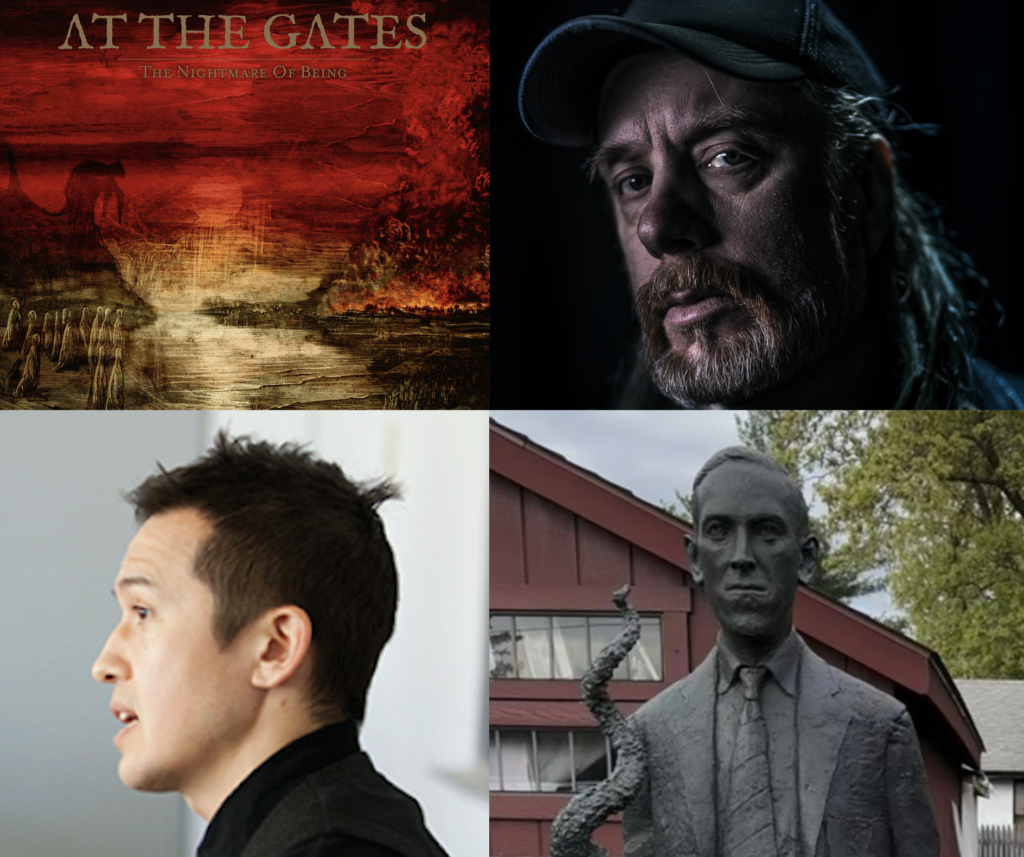
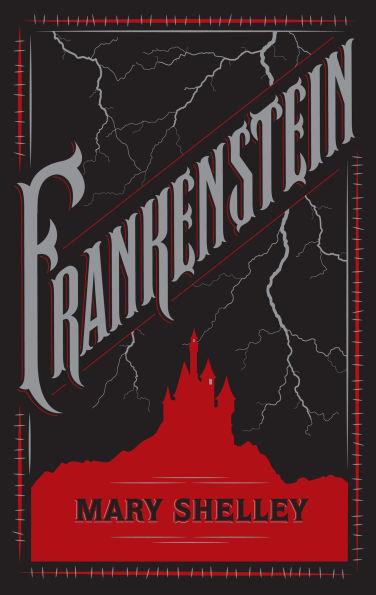
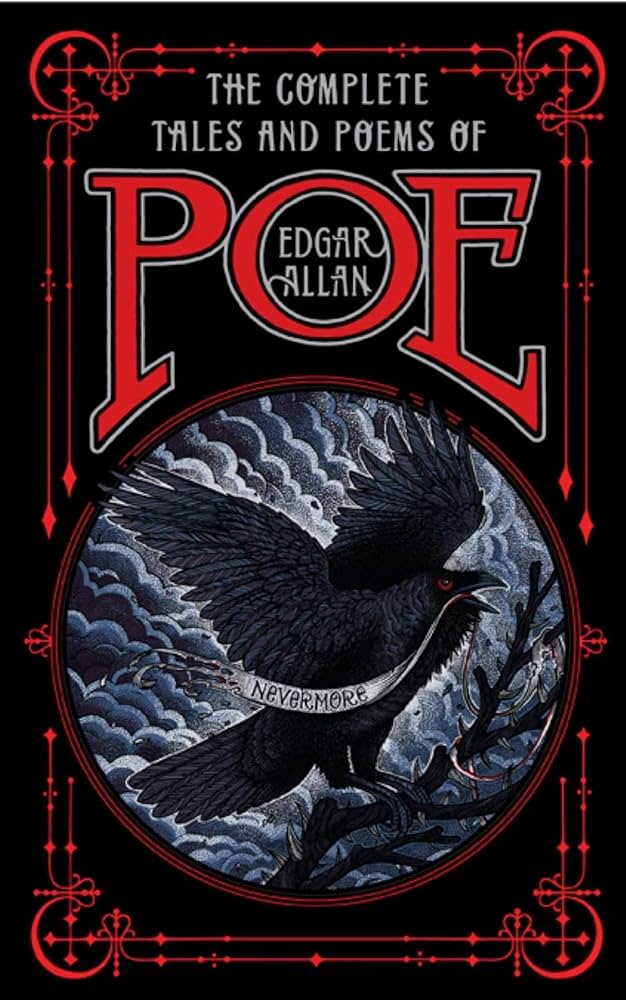
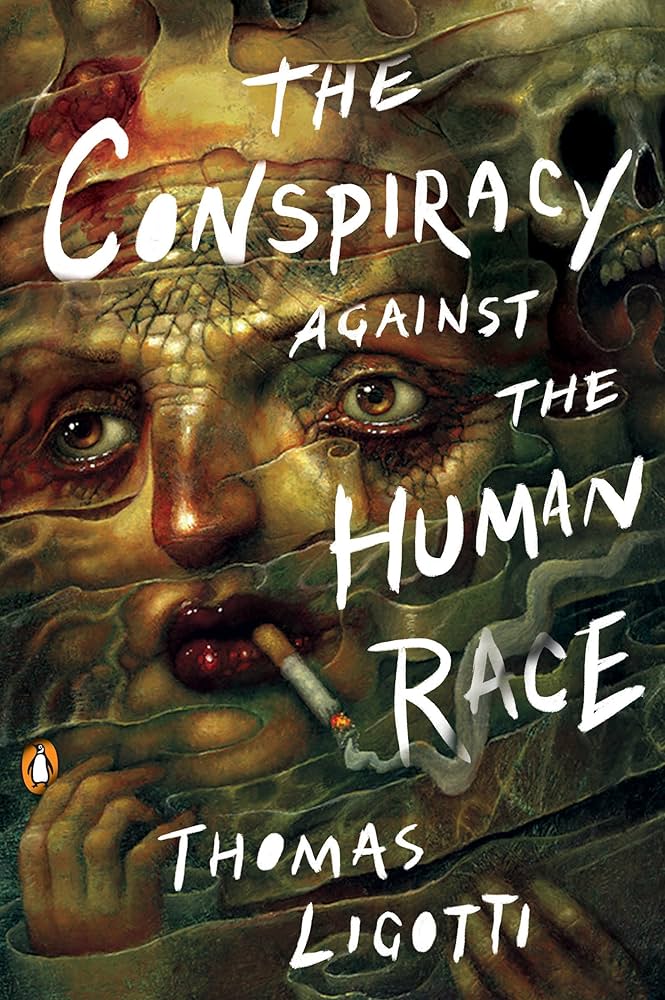
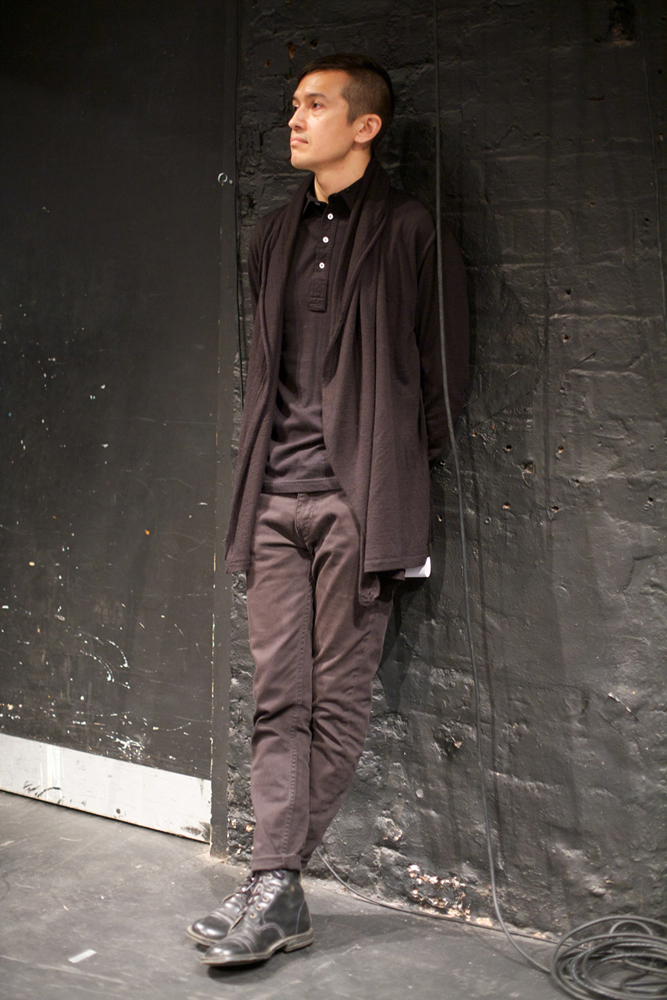
Tomas Lindberg started reading H.P. Lovecraft as a teenager. The Swedish death metal singer fronted At The Gates, Disfear, The Lurking Fear, and half a dozen other bands across thirty-five years of work. Off the stage, he was a reader. He traced his own intellectual trajectory in a spectacular 2021 interview with Metal Hammer: from Lovecraft, picked up alongside Poe and Mary Shelley in his Swedish teens, to the contemporary American horror writer Thomas Ligotti, and from the footnotes of Ligotti’s 2010 nonfiction book The Conspiracy Against the Human Race to a sitting American philosopher named Eugene Thacker.
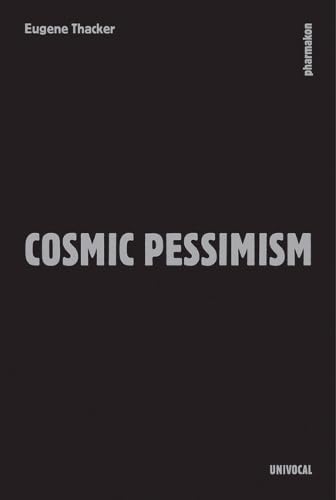
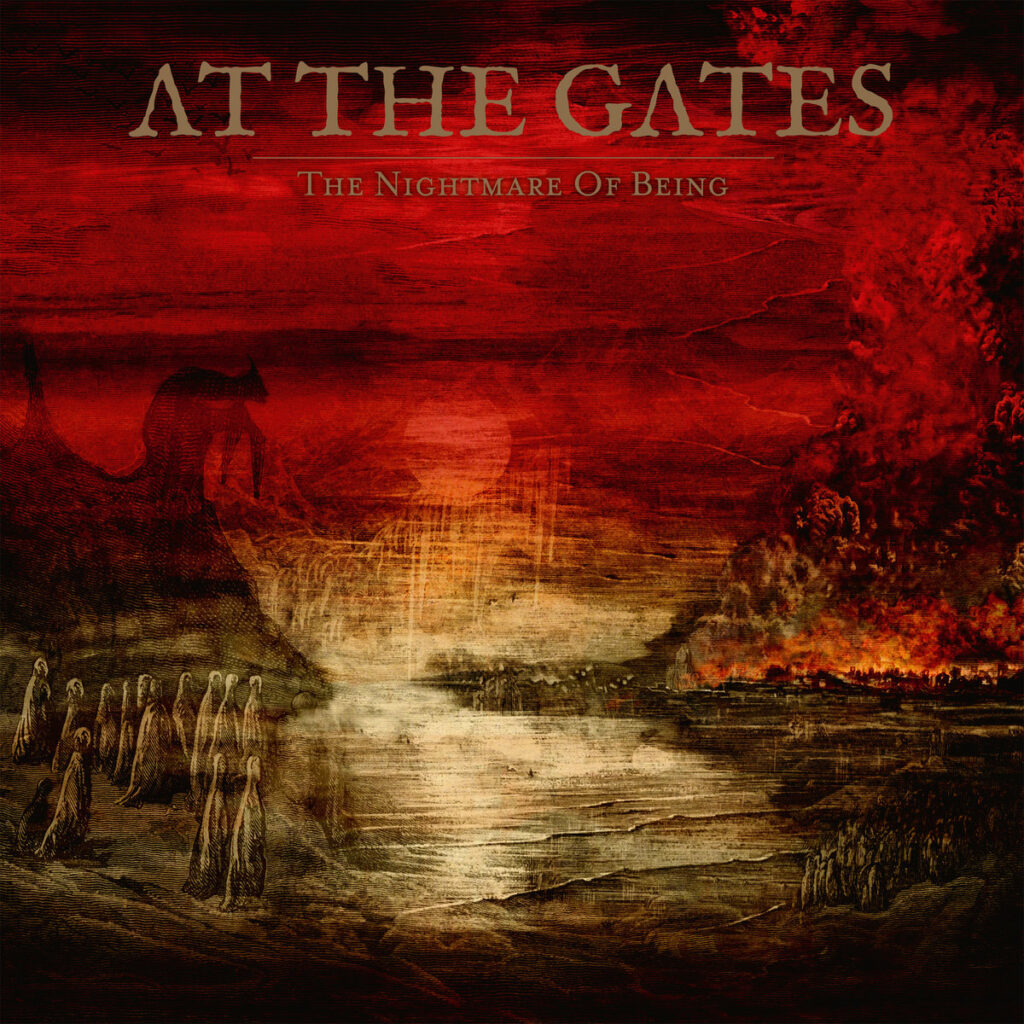
By Lindberg’s own account, when he found Thacker, his head went “bang”. In 2021, At The Gates released an album titled The Nightmare of Being. On it is a song called “Cosmic Pessimism”, named after Thacker’s 2015 book of the same title. The song’s central refrain reads: “We do not live, we are lived. Pessimism, the last refuge of hope.” Lindberg gave it as Thacker’s, and it is, but not as a passage. It is two separate lines from the book, pages apart, with everything between them removed. In Thacker, “we do not live, we are lived” is not a statement. It is followed at once by a question: what would a philosophy have to be to begin from that, rather than arrive at it. “Pessimism is the last refuge of hope” stands alone much later, hemmed in by aphorisms about bad jokes and futility. The words belong to a sitting professor at Parsons School of Design in New York, a leading contemporary writer on philosophical pessimism. Death metal songs are not, as a rule, co-written with the philosophers whose ideas they engage. This one was, and it went further than co-writing usually does. Lindberg dropped the question, dropped the bleakness around the hope, and fused what was left into a line that sounds like defiance. The book does not sound like defiance. He read Thacker the way the rest of this piece argues both he and Lovecraft read the cosmos: as raw material that means nothing until someone makes it mean something.
Lindberg died on September 16, 2025, at the age of fifty-two. The cancer was in his mouth. Eighty-eight years and six months earlier, on March 15, 1937, in a hospital bed in Providence, Rhode Island, H.P. Lovecraft died of cancer as well, at the age of forty-six. Both men spent their lives thinking about the same idea: the cosmos does not know or care that we are here. Lovecraft gave it a name. Metal has lived in it for forty years. And both men, when they were dying, answered it the same way.
Lovecraft wrote, in a 1927 letter to the pulp editor Farnsworth Wright: “Now all my tales are based on the fundamental premise that common human laws and interests and emotions have no validity or significance in the vast cosmos-at-large.” He called this philosophy “cosmic indifferentism”.
It is a more specific claim than people usually realize. The cosmos is enormous and ancient. It is not hostile. It is not benevolent. It is not anything, with respect to us. We are not actors in a story being told by anyone. We are not characters being watched by a god. We are matter, briefly arranged in patterns capable of asking questions, on a small planet, in a galaxy that will one day collide with another galaxy, in a universe that will eventually run out of usable energy and end. The “Old Ones” in Lovecraft’s fiction are not evil. They are old, and large, and asleep, and our existence is so small to them that when they finally wake up they will not even notice they have stepped on us.
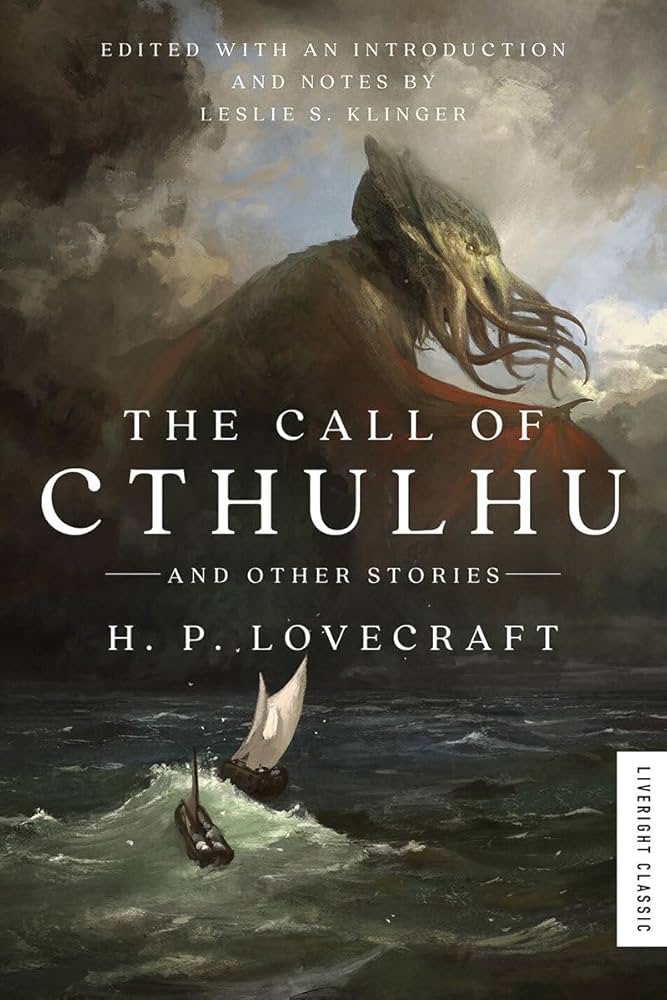
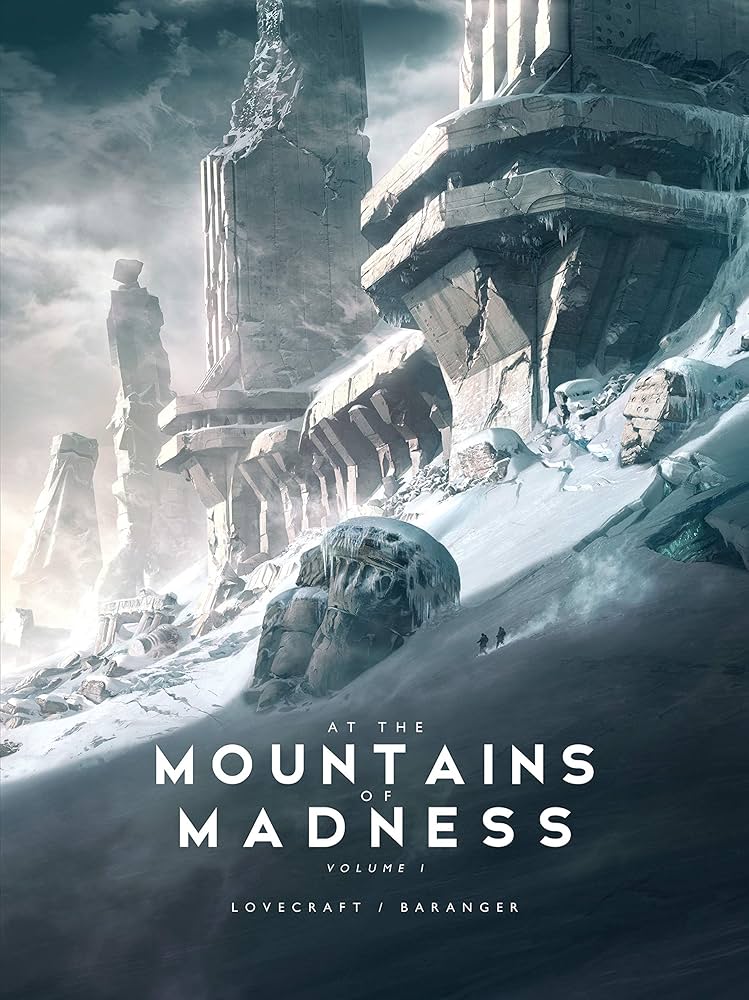
This is the premise underneath almost all the stories Lovecraft wrote. It is also, as Lindberg understood, the premise that contemporary philosophical pessimism has been developing for nearly a hundred years. Thacker writes inside it. Ligotti writes inside it. Another of Lindberg’s sources of inspiration, the Norwegian philosopher Peter Wessel Zapffe, was already writing inside it in 1933, in his foundational essay The Last Messiah. The idea is cold enough that giving up on everything can look like the only sane response. But both Lovecraft and Lindberg are a testament that cosmic indifferentism fails to confine its adherents invariably to nihilism.
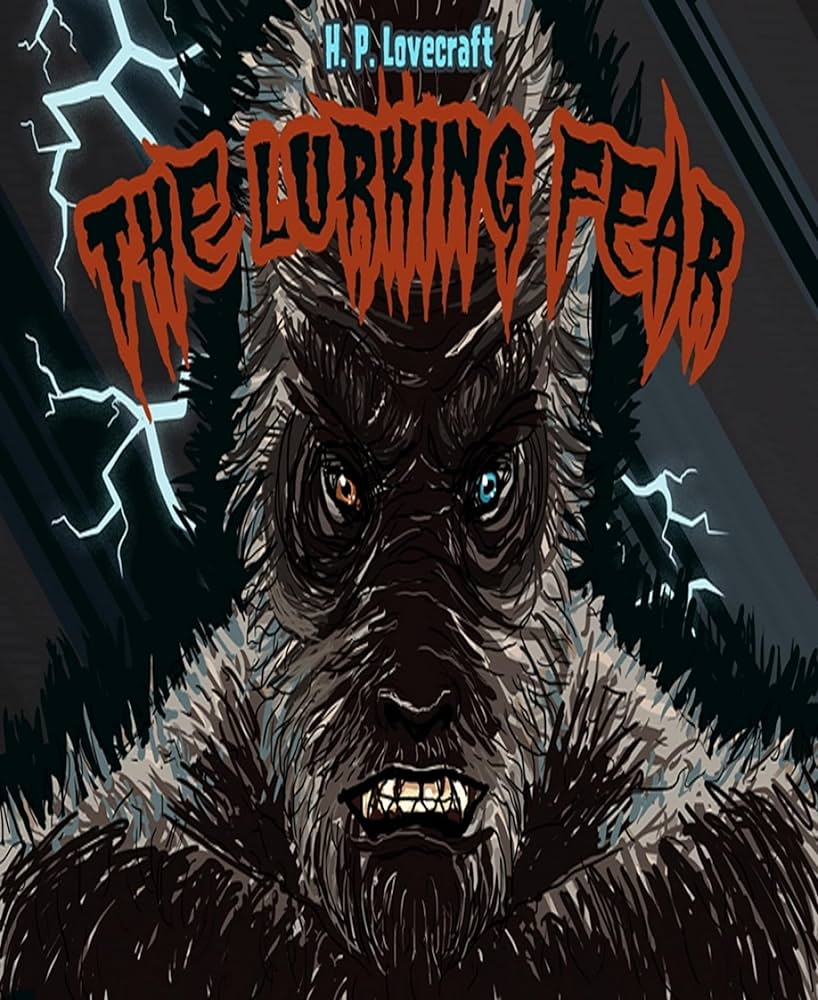
Lindberg’s path through that line, as he described it in 2021 to Metal Hammer and again to Revolver, ran like this. As a teenager in early-1980s Sweden, going deeper and deeper into metal, he had picked up the classic horror writers. Decades later, when he wanted to anchor an old-school death metal side project that took the genre back to its first-wave fundamentals, he named the band The Lurking Fear, after a Lovecraft short story, and went back into the Lovecraft corpus for material. By the time he was writing his second The Lurking Fear album, he wanted something contemporary in the same intellectual line. His At The Gates bandmate Martin Larsson, he told Revolver, kept nagging him to read Ligotti’s The Conspiracy Against the Human Race. When he did, his head opened. Ligotti’s footnotes were full of references. They pointed him to Schopenhauer, to Zapffe, and to Thacker.
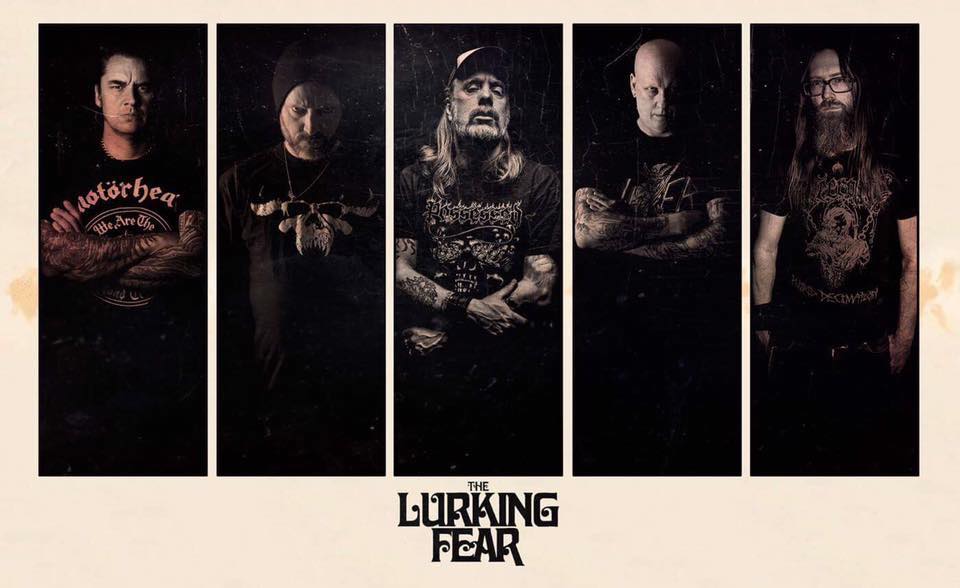
When Lindberg sat down to write “Cosmic Pessimism” for The Nightmare of Being, he wrote to Thacker, initially intending only to ask for a short quote for the liner notes. Thacker offered him the run of his book. Lindberg pulled passages from it, set them as a spoken-word part, and Thacker approved their use.
Tomas Lindberg taught social studies in a Swedish secondary school. He was a reader. One of the most important vocalists of the Gothenburg sound was, off the stage, a quiet man with a heavy library.
H.P. Lovecraft died on March 15, 1937. He had been ill for about a year before they finally diagnosed him in late February. By the time they did, he had a little over two weeks left. He was admitted to the hospital five days before he died. Through those last five days, he kept what’s been called a “death diary”: a clinical record of his symptoms, his pain, the failing of his body. He wrote in it until he could no longer hold a pencil. His friend Robert Barlow took possession of the diary after his death and transcribed it. The original notebook disappeared in the years that followed. Barlow’s transcriptions survive.
Tomas Lindberg was diagnosed with adenoid cystic carcinoma in December of 2023. Part of the roof of his mouth was removed, followed by months of radiation. In early 2025 the cancer came back where surgery could not reach. The day before he went in for major surgery, the surgery he knew might be the last thing he ever did, Lindberg walked into a studio and recorded the vocals to his band’s final album in a single day. Most of the takes in one pass. He told the journalist who interviewed him about the session afterward: just to make sure we had the album, so to speak. The album, The Ghost of a Future Dead, came out on April 24, 2026, with its title, sound, sequencing, and artwork all settled by Lindberg himself before he died.
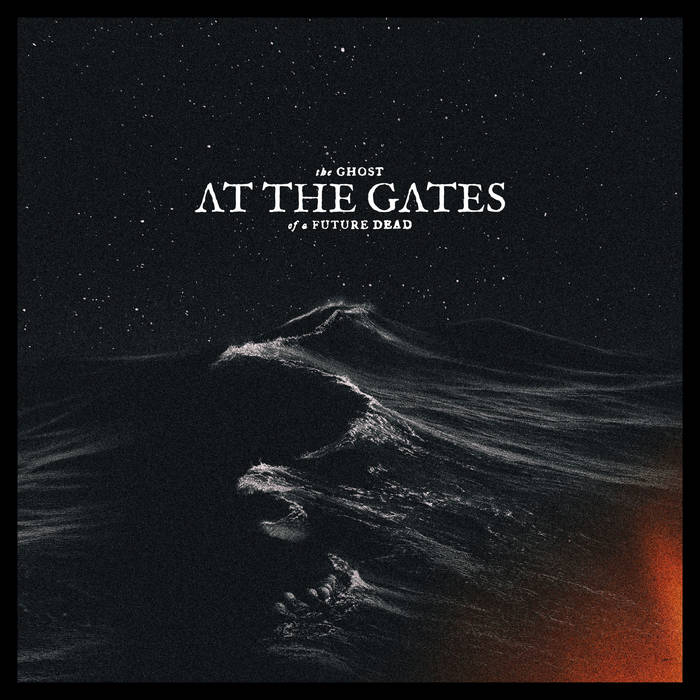
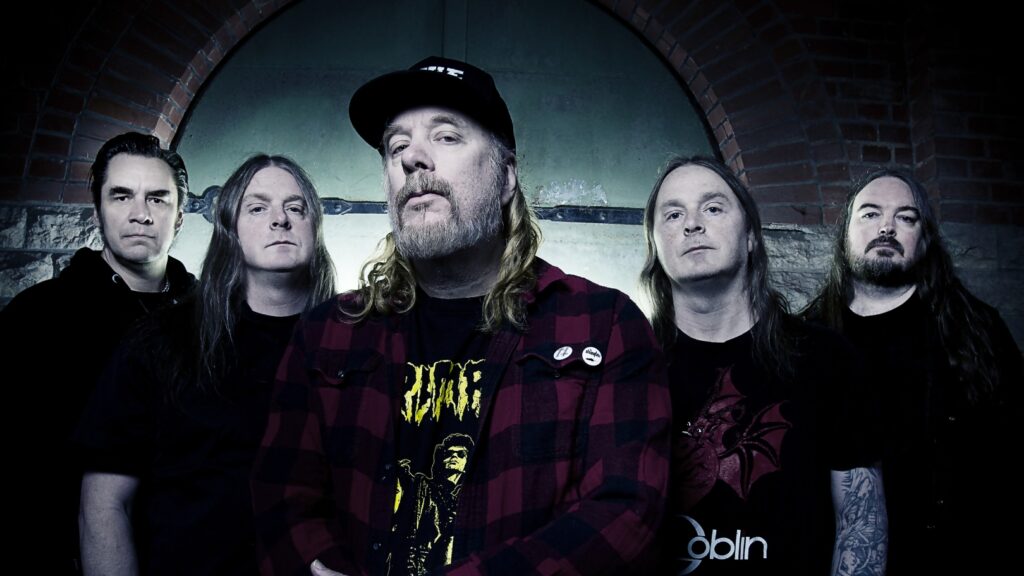
Two men eighty-eight years apart had the same impulse. Knowing the end was coming, each of them reached for a pen, or for a microphone, and recorded what he could while he still could.
People assume that if you really believe what Lovecraft believed, that the cosmos has no opinion about you, you give up. You conclude that nothing matters, that no project is worth pursuing, that no other human being deserves your time. Thacker, the philosopher Lindberg followed to the end of that line, does not take the way out either. He will not call it nihilism and he will not call it hope. He lays out the responses available to someone who has accepted that the cosmos is indifferent, crying, laughing, sleeping, and then asks: “what other responses are adequate to a life that is so indifferent?” He leaves the question open. His answer, if he has one, is the book itself.
Lindberg and Lovecraft answered it with their bodies. Precisely because no god is watching, the people in front of us are the entire audience that exists. Precisely because the cosmos does not care, our care is the only care there is.
Lovecraft spent the last decade of his life living with his aunts in Providence, sickly, lonely, chronically broke. He could have crawled into a hole. Instead he wrote, by the standard estimate, around a hundred thousand letters in his lifetime, long generous letters to strangers and children. When a sixteen-year-old kid in Milwaukee named Robert Bloch wrote him a fan letter in April 1933, Lovecraft wrote back at length. He sent reading lists. He sent tear sheets. He read Bloch’s earliest writing and gave him notes. They corresponded for four years, until Lovecraft’s death. Bloch went on to write Psycho and credit Lovecraft as, in his words, my university. Lovecraft fed stray cats. He gave them names. He wrote essays about how a cat, like a superior man, knows how to be alone and happy.
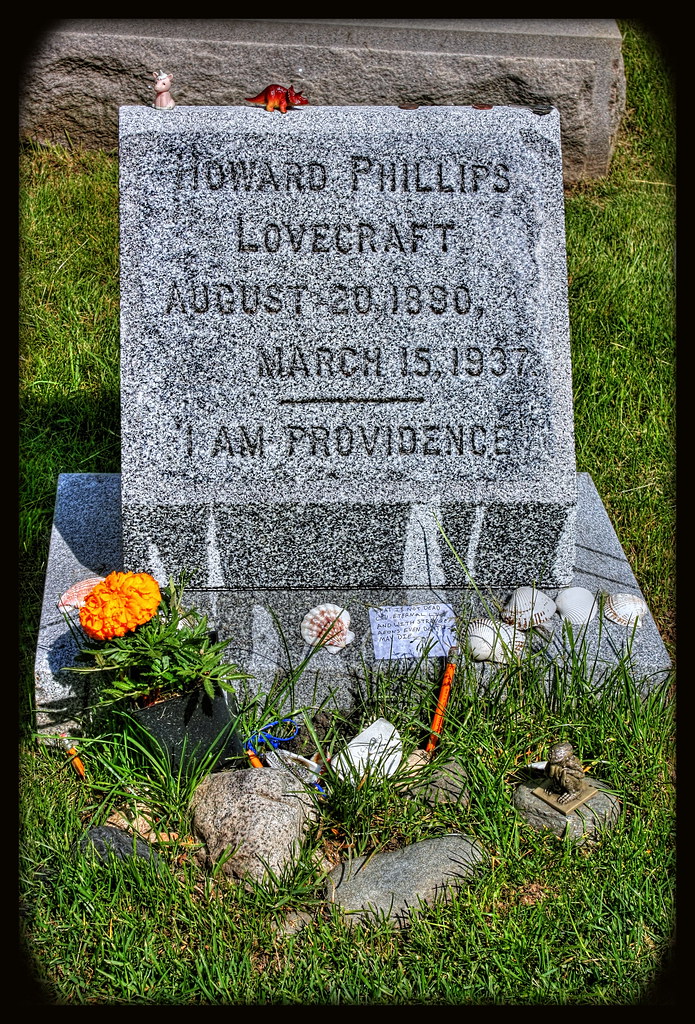
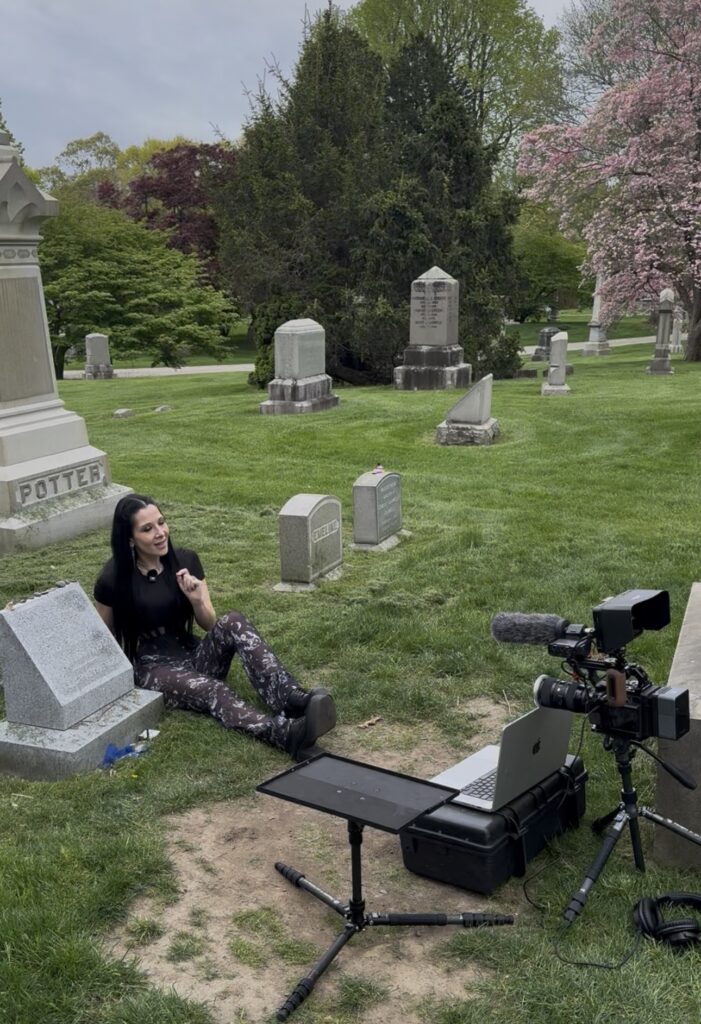
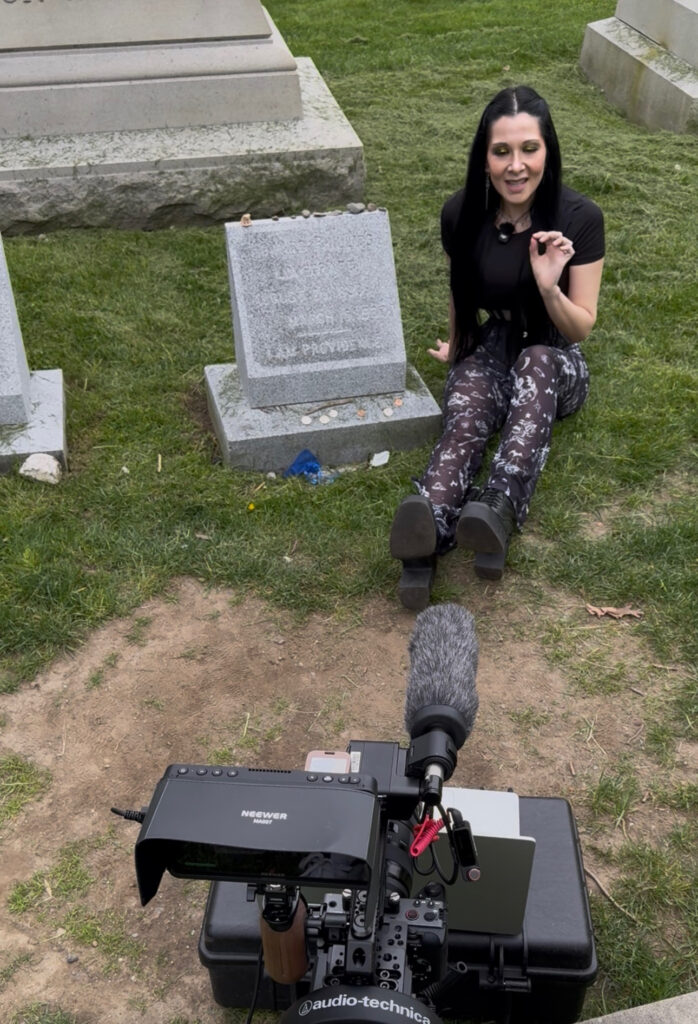
The famous line is from a letter Lovecraft wrote to his aunt Lillian in 1926: Providence is part of me — I am Providence. It is also what is carved into his headstone, a stone his readers paid for in 1977, forty years after he died.


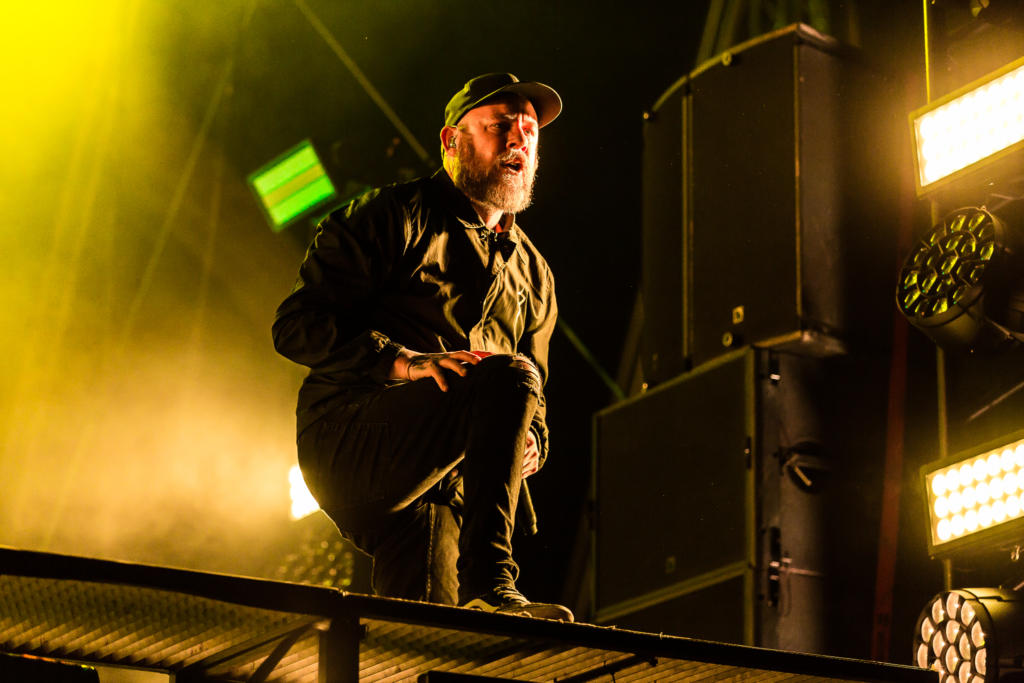
Lindberg did the same kind of work. He fronted At The Gates from the age of eighteen, but more than that, he was a connector, a scene-builder, a mentor. Mikael Stanne, the vocalist of Dark Tranquillity, who had known him since the scene’s early days, called him “a unifying presence”: the person who pulled the younger Gothenburg musicians into extreme metal through tape trading, fanzines, and shared rehearsal rooms. Anders Fridén, the vocalist of In Flames, said the morning after Tomas died that he wasn’t sure he would have ever got where he is without him. He thanked Tomas for putting cassettes in his Walkman and handing it to him, on the bus, when they were teenagers.
Two voices that defined the Gothenburg sound went on the record to credit a third as one who pulled them in. Lindberg handing out his cassettes to younger people was the same gesture as Lovecraft writing to the kid in Milwaukee.
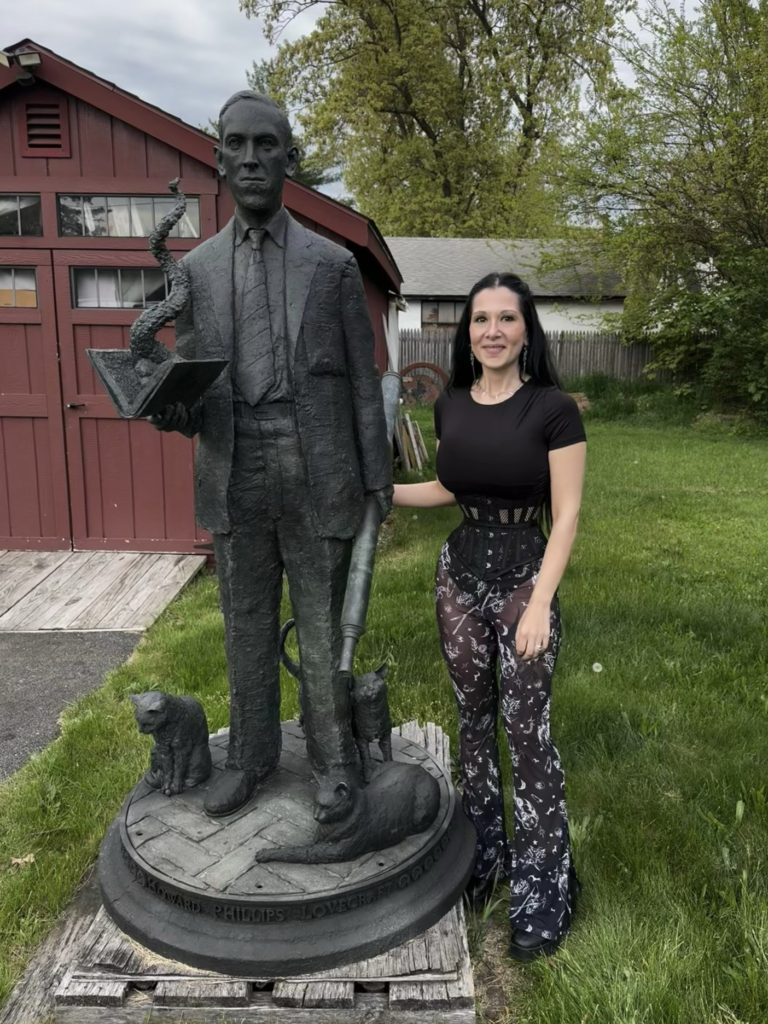
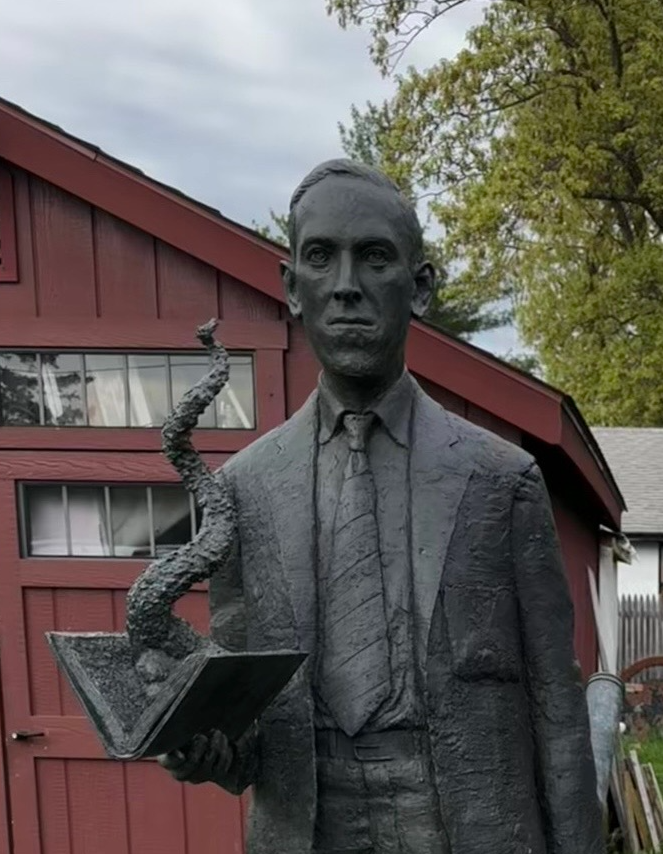
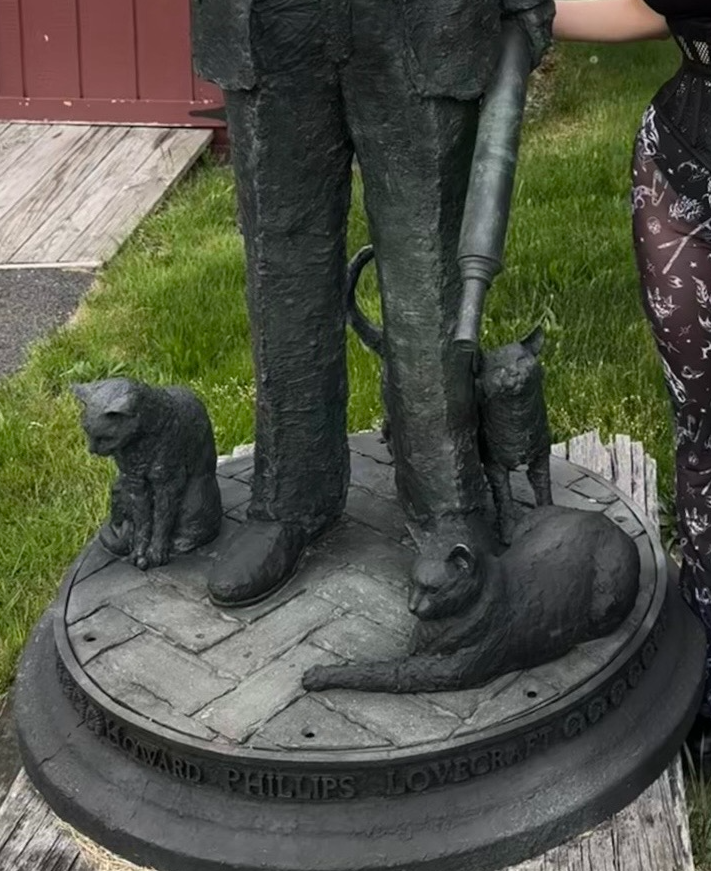
All of which brings me to a bronze statue at the tip of a suburban driveway in Pawtucket, Rhode Island. The statue is a lifesize likeness of H.P. Lovecraft, sculpted by the artist Gage Prentiss. Three cats sit at the man’s feet. An open book in his hand has a tentacle pushing out of the pages. The telescope he holds points back and upwards, seeing what his forebears could not.
The bronze was meant to stand downtown, in Providence, at the confluence of the two rivers, on Steeple Street, in the city where Lovecraft was born and lived and died. The Lovecraft Arts and Sciences Council commissioned it in 2015. The city approved the location. The unveiling was planned, but it never happened.
The reason was a public conversation about Lovecraft’s racism. Some scholars have argued that Lovecraft’s views went considerably beyond what was conventional for his time, and that his enormous modern fanbase is therefore inappropriate. This is a real debate, and it deserves to be taken seriously. The people behind the statue, Gage Prentiss and Niels Hobbs of the Lovecraft Arts and Sciences Council, were not strangers to the question. Prentiss has also sculpted a statue of Edward Mitchell Bannister, the nineteenth-century Black painter and co-founder of the Providence Art Club, which now stands at Market Square in Providence.
In metal, Lovecraft remains a constant source of inspiration not because of anything he said about race, but because of what we have been discussing: Cosmic indifferentism, and the premise that the cosmos does not know we are here, and that working through what that means for being human is one of the most demanding intellectual exercises philosophy has ever attempted. It is what Tomas Lindberg was doing. It is what Thacker is still doing.
Metal keeps a near-complete census of itself: the Encyclopaedia Metallum, which files every band by lyrical theme. Lovecraft is one of those themes, and the bands under it run well into the hundreds, on every continent the genre has reached. These bands are not there for what he said about race.
The bronze stands at the tip of the driveway. An endless barrage of noisy vehicles pass by, 10 meters from the statue. The man it depicts wrote that the cosmos does not know or care we are here. The cosmos does not know or care where his statue is, either. Gage told me, “it hasn’t found its forever home yet, but it will.” Bronze is patient. It will wait for the people who care to come and move it. A cosmos that does not care; people who care anyway. It is what Tomas Lindberg was doing eighty-eight years and six months after Lovecraft, recording his final vocals in a single day so that no matter what came next, the album would exist.
“Just to make sure we had it.”
1 thought on “The Passing of At The Gates’ Tomas Lindberg and the Cosmic Indifferentism of H.P. Lovecraft”
this was a fascinating read!