
Saturday, May 2nd 2026, they call it a “Satanic Revival” deliberately mocking Christian revivals meant to re-energize the faith of believers. I have followed the TST closely for years, but I had never been to one of their in-person events. I did not expect it to be so metal.
It was the second of a two-day event organized by The Satanic Temple at the Mobtown Ballroom in Baltimore. Members of the TST travel across the country to attend events, to discuss the future of the movement, to share their experiences as members of the Temple, to dream about a truly secular United States of America, and, so I learned, to enjoy live music. In this congregation, metalheads are wildly over-represented. As I arrive and park my car around the corner, the first person I see is walking in the opposite direction towards the venue, and Cradle of Filth’s iconic backside print “Jesus Is A Cunt” stares back at me. Inside, metal T’s and hoodies are everywhere; an army fully clad in black chants “Hail Satan!” and throws the devil’s horns at every occasion.
The resemblance between the people of Satan and a metal crowd is striking. In between events, it is as natural to approach strangers and strike up a conversation about the band on their shirt as it is to discuss the TST. Neither is difficult.
The Satanic Temple is a non-theistic religious organization, federally recognized in the U.S. as a church, founded in 2013 by Lucien Greaves and Malcolm Jarry. Its members do not believe in a literal Satan; the figure functions as a symbol of rebellion against arbitrary authority, of rationalism, and of bodily autonomy. Its theology is codified in seven tenets emphasizing compassion, science, justice, and the inviolability of the body. In practice, TST operates as a religious-liberty advocacy group, using the legal protections that American law extends to religion to challenge various infringements of personal liberty: the appearance of state-sponsored religion in public schools, restricted access to abortion, Christian monuments erected on government property, among many others.
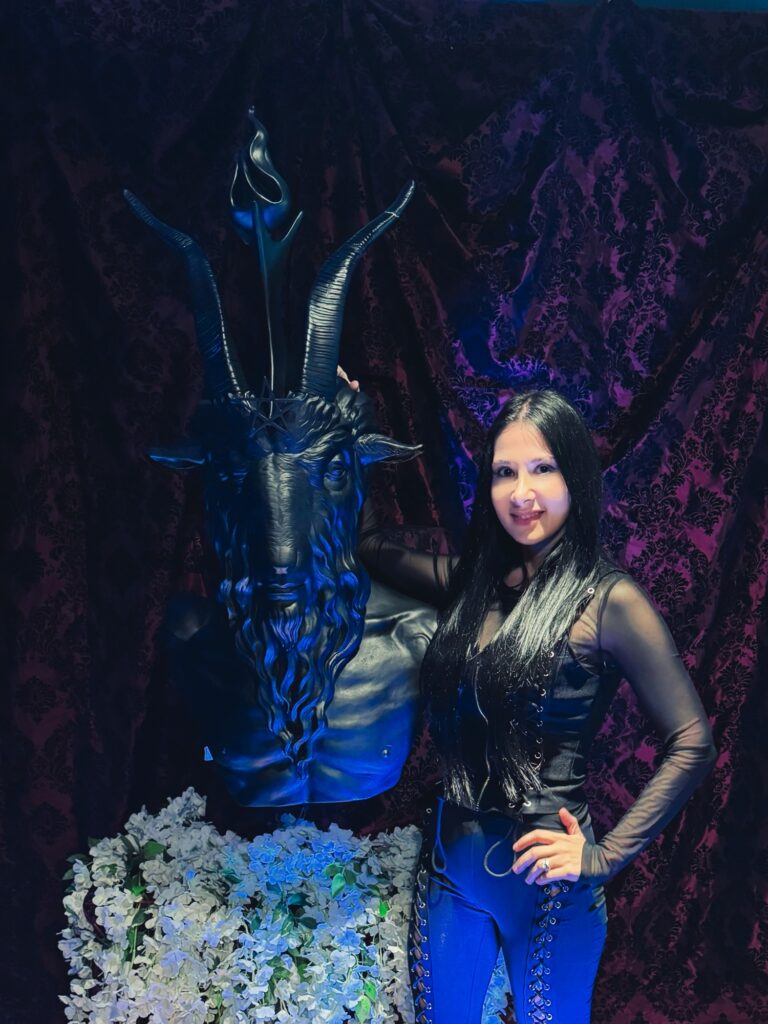
The day is full of events. Members of the community take the stage in turn to share their experiences and their advocacy. In the background, congregants posed for photos with a statue of Satan or with a devil-wing backdrop, psychics read futures, counselors dispense pamphlets to those seeking help with a drinking problem, gamers play Magic, artisans show their work, and TST booths sell official merchandise and collect donations for the Temple’s public campaigns.
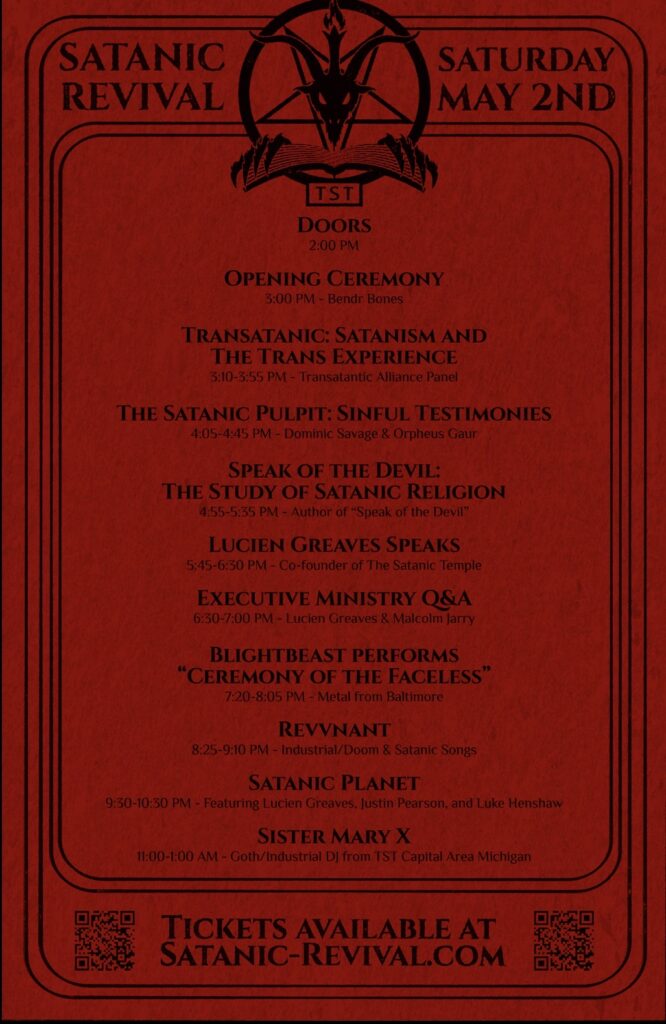
Lucien Greaves, the TST’s founder and public face, is the star of the night. There is a veritable aura that surrounds his presence on the stage, a receptive enthusiasm that reverberates throughout the audience as he speaks. His talk and Q&A run through the Temple’s most recent legal battles and lay out an ambitious three-year plan for the organization, from achieving a uniform congregation experience across the country to launching new collaborations with animal shelters, a video game developer, as well as other initiatives.
Greaves closes the late-afternoon Q&A with a humble invitation that congregants might stick around for the rest of the evening, because his metal band is headlining the afterparty.
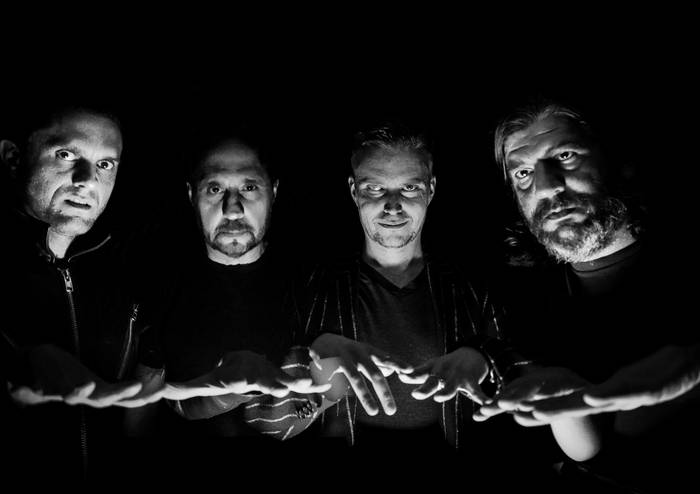
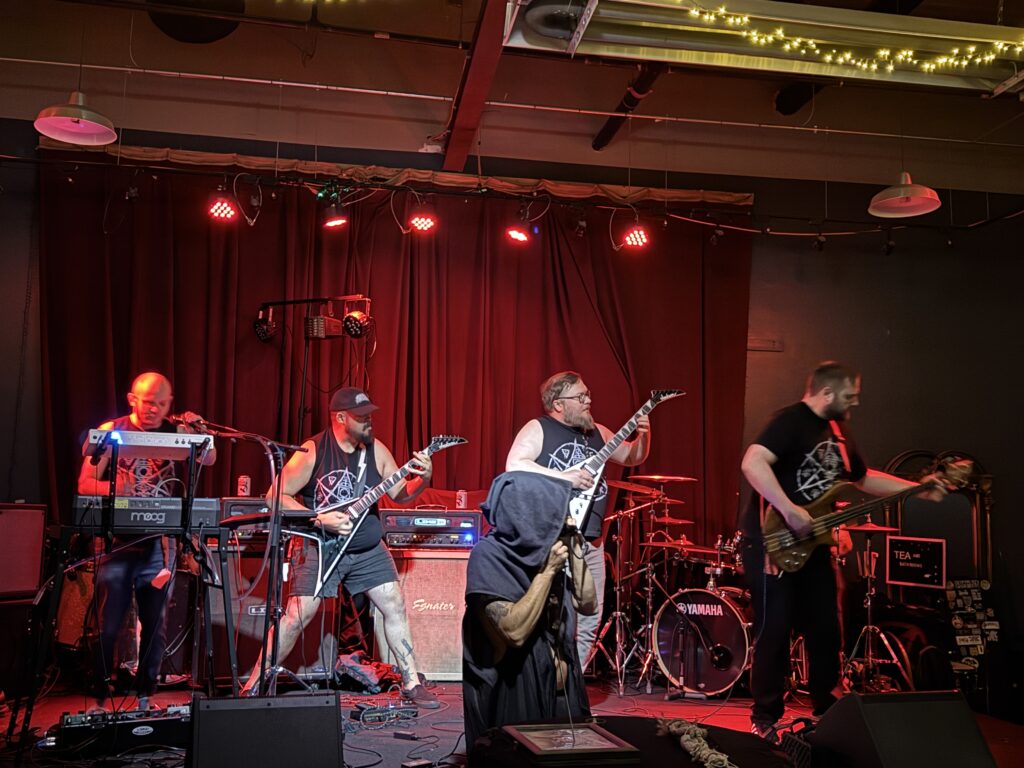
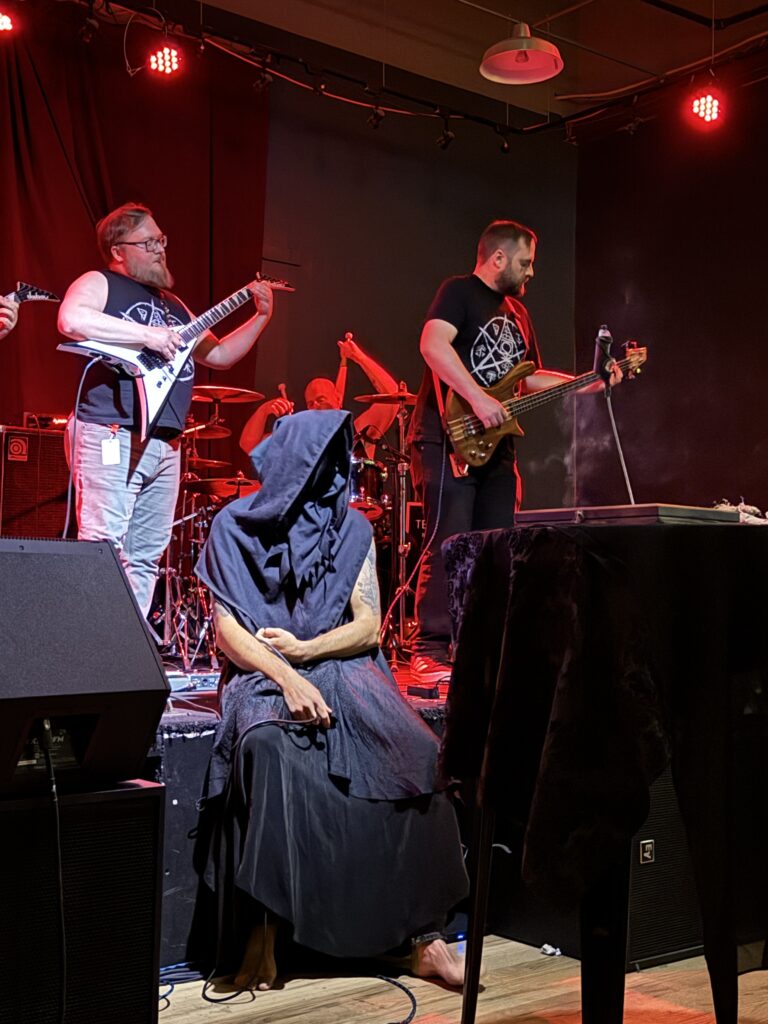
The chairs are cleared and the room transforms into a concert venue. The first band on is Blightbeast, a progressive black metal act from Baltimore, performing Ceremony of the Faceless, the immersive suite they wrote in 2024 for the Baltimore Rock Opera Society. The original production was a 35-minute theater piece staged as a fictional pagan rite, with the stated intent “to let evil walk among us.”
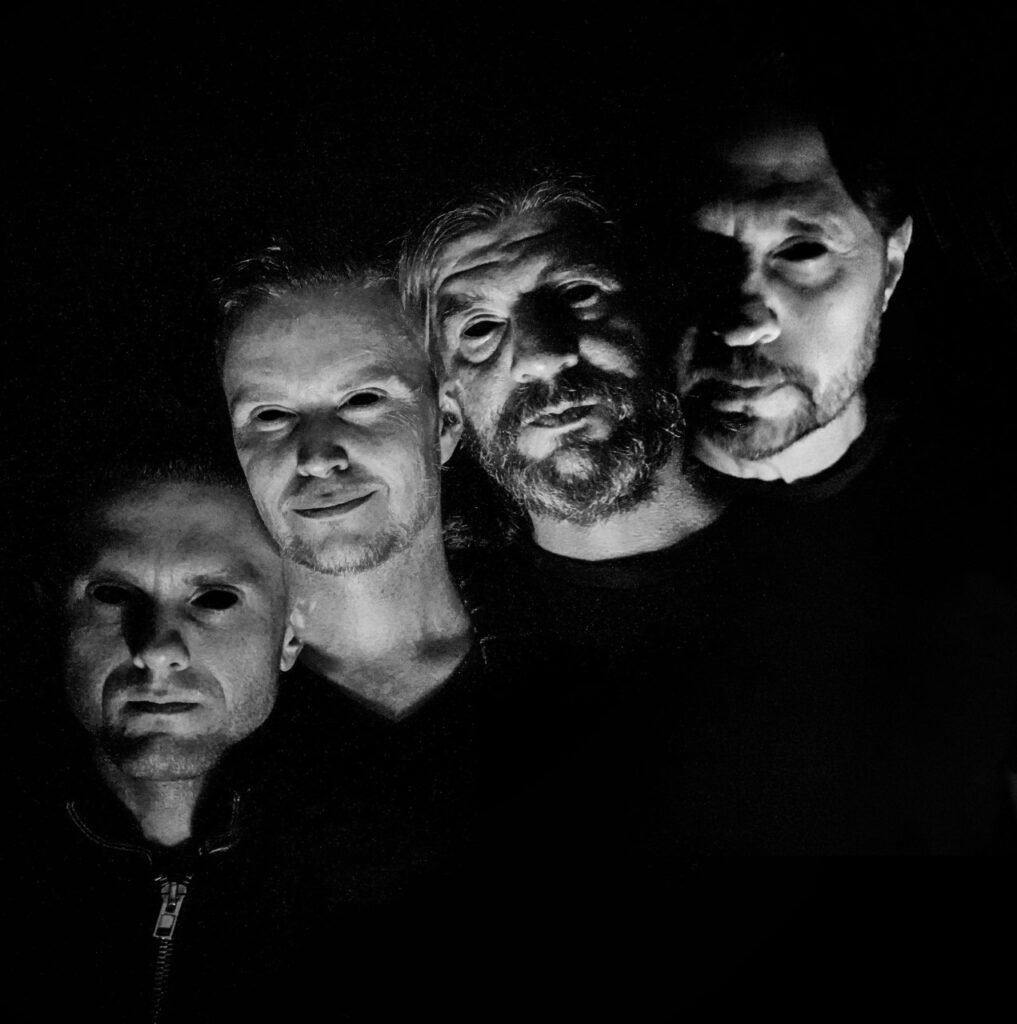
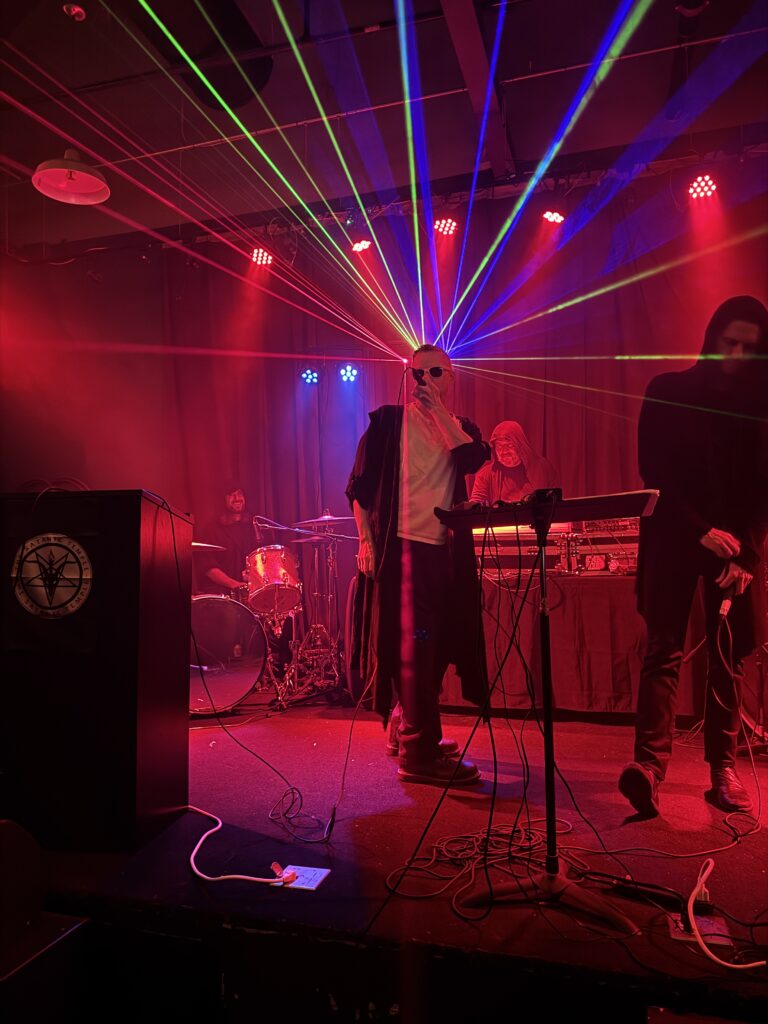
Greaves’ industrial metal band, Satanic Planet, plays last. The band is something of a supergroup: Luke Henshaw (Planet B, Sonido de la Frontera) on electronics, Justin Pearson (The Locust, Dead Cross, Swing Kids, Deaf Club) on bass and vocals, and the legendary Dave Lombardo (Slayer, Misfits, Mr. Bungle, Dead Cross) on drums.
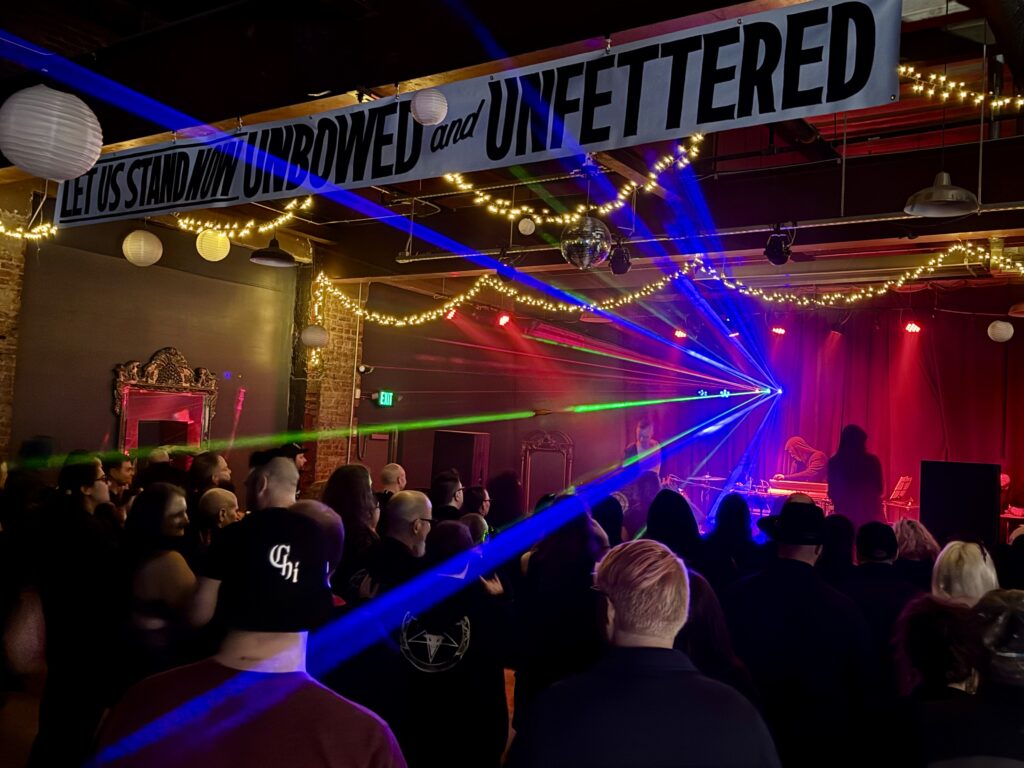
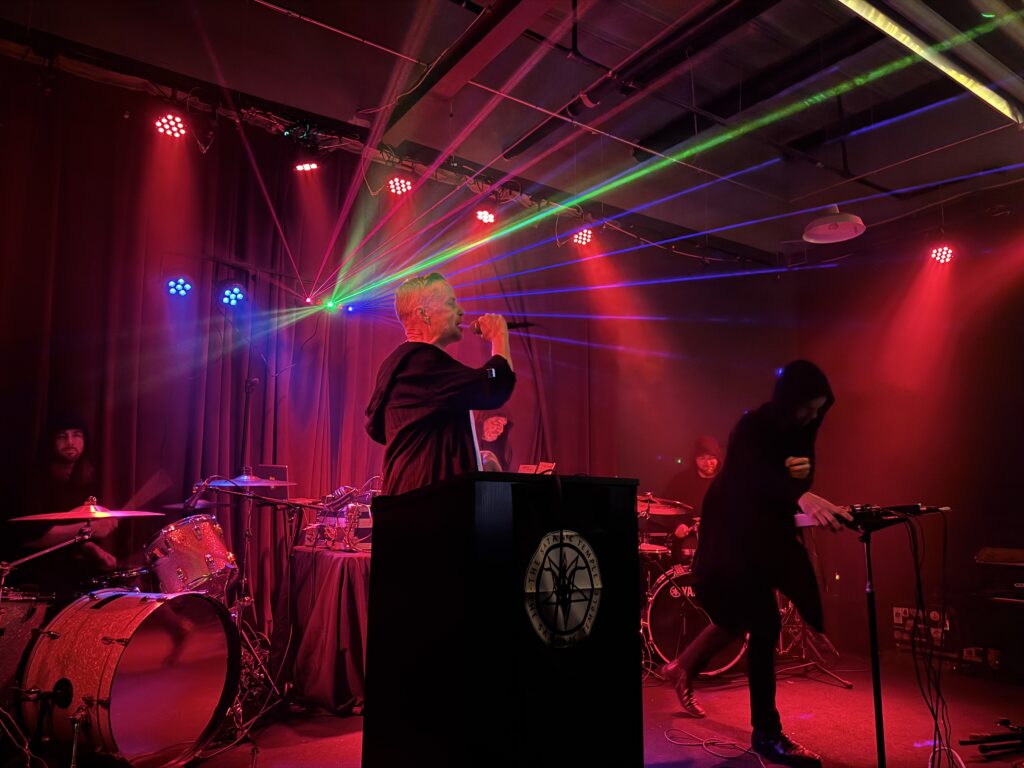
The story of how this band came about is remarkable. The project begins with Greaves’s 2019 press campaign for the documentary Hail Satan?. While in England, he was asked by Metal Hammer about his favorite music and named Dead Cross, Pearson and Lombardo’s project with Mike Patton. The interview reached Pearson, who invited Greaves onto a podcast he co-hosts with Henshaw. They met in Salem, and during that hangout Pearson floated the idea of an album. The original concept was Greaves doing spoken word over background sounds. That changed once he flew to the West Coast to work on it. The pandemic, which initially seemed to halt momentum, freed up Lombardo to join. The self-titled debut came out on May 28, 2021, on Three One G Records.
Five years on, Satanic Planet have just signed to Relapse Records and announced a sophomore record, Dead Deities, due this fall. Baltimore was the third and final date of a mini-tour celebrating the signing.
Satanic Planet’s lyrics translate the Satanic Temple manifesto into music. Each track is given a theme that reflects TST’s mission and public campaigns. Grey Faction, for instance, documents the Temple’s work to end the pseudoscientific mental health practices that feed conspiracist Satanic Panic delusions. Unbaptism quotes the actual ritual script designed for the Satanic Temple in Salem. With Baphomet, Greaves renders in verse the TST theology of its namesake icon, interpreted as a symbol of reconciliation of opposites, dueling binaries combined and transcending into something greater than the sum of their parts.
When Satanic Planet took the stage, the horn-raised chant of “Hail Satan”, a staple throughout the evening, now resumed at its loudest yet. The overlap between the Satanic Temple and the metal scene is more real than I had realized. It is not — or not only — a matter of shared aesthetics. Both communities treat the figure of Satan as a symbol of identity, in either case with a healthy dose of skepticism concerning His existence in a real sense. Both engage seriously and at length with the idiom of Christian religion as a refusal of its norms. Both build belonging through a shared rejection of moral authority delivered from above and rooted uniquely in that distant time and place of which the Scriptures speak. The Satanic Temple labors to put forward their version of a legal architecture for this movement. Metal provides its sound. The crowd in Baltimore was not two communities sharing a venue for a night. It can legitimately be described as one and the same community.
1 thought on “And the Devil Came to Baltimore: TST’s “Satanic Revival””
lorem ipsa