
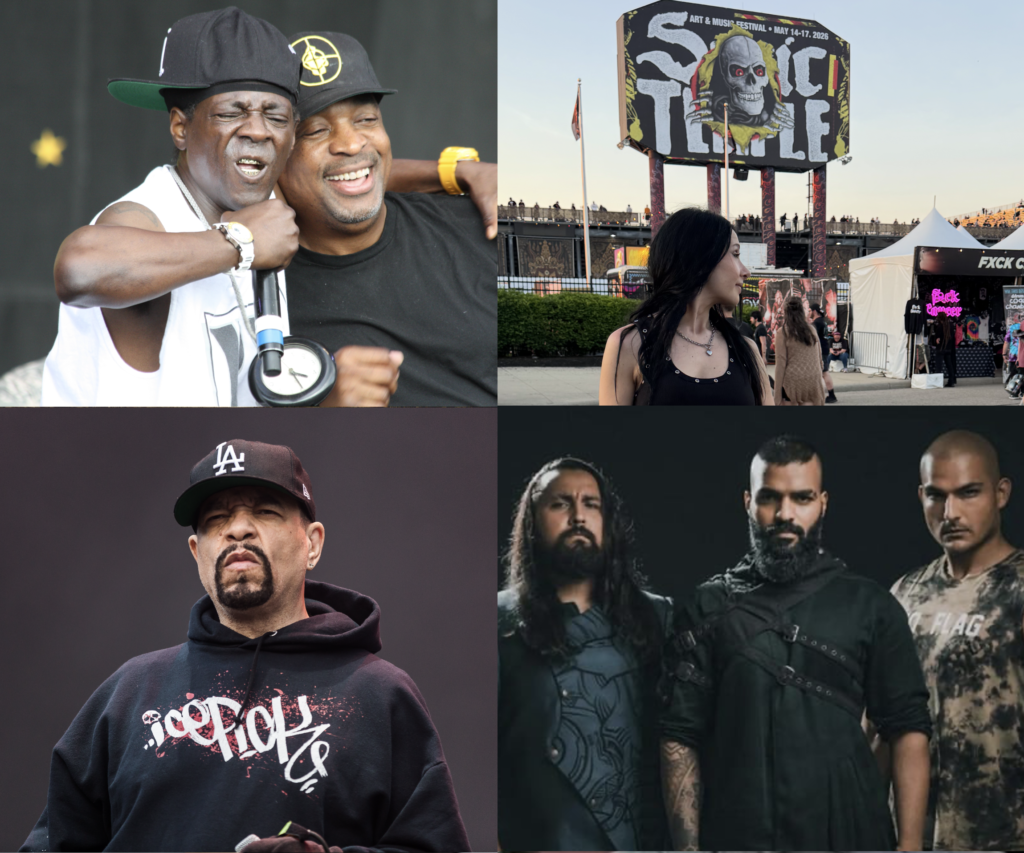
Gatekeeping is a sensitive subject. All can agree that too much of it becomes a bad thing, but without it entirely, labels lose their meaning.
So, is Sonic Temple a metal festival?
For a significant number of metalheads the answer might be no, on the grounds that fewer than half of the bands on the bill really qualify. My own sense, after attending for the first time this past weekend, is that “metal” describes the event better than “rock”, “alternative”, or any other label. There were a fair number of pop-rock acts on the schedule, but the vibe on the grounds felt to me a lot more Wacken than Warped Tour. The center of gravity was heavy.
I love that Sonic Temple does this. It books metal-adjacent gateway acts whose sound nudges festival-goers in our direction. And it books acts that aren’t metal-adjacent at all, whose sound nudges no one toward metal, but whose presence brings fresh potential metalheads onto the grounds to then catch some real metal they might have never otherwise witnessed live.
This is a big-tent argument for metal, and it relies on a “the more the merrier” view of the genre. I can respect the fans who want their metal to stay small, underground, niche, resistant to commercialization. But I’m not one of them. On metal, I’m an evangelist. It pleases me to watch it spread far and wide.
I don’t feel this way only because I want more money flowing into the scene. I feel it out of a sincere belief that metal brings social benefit. This belief creates a problem. What if an adjacent act that Sonic Temple wants to book doesn’t align with my view of what makes metal socially beneficial? On almost every issue I would not allow myself to gatekeep on the basis of ideology. The range of beliefs and opinions among metalheads is huge, and it would be both impossible and undesirable to narrow it. But on one issue, one that sits closely beside one of the things I love most about metal, I do find myself sympathetic to the gatekeepers. That issue is religion.
It is no secret that metal is obsessed with religion. The obsession is not a warm one.
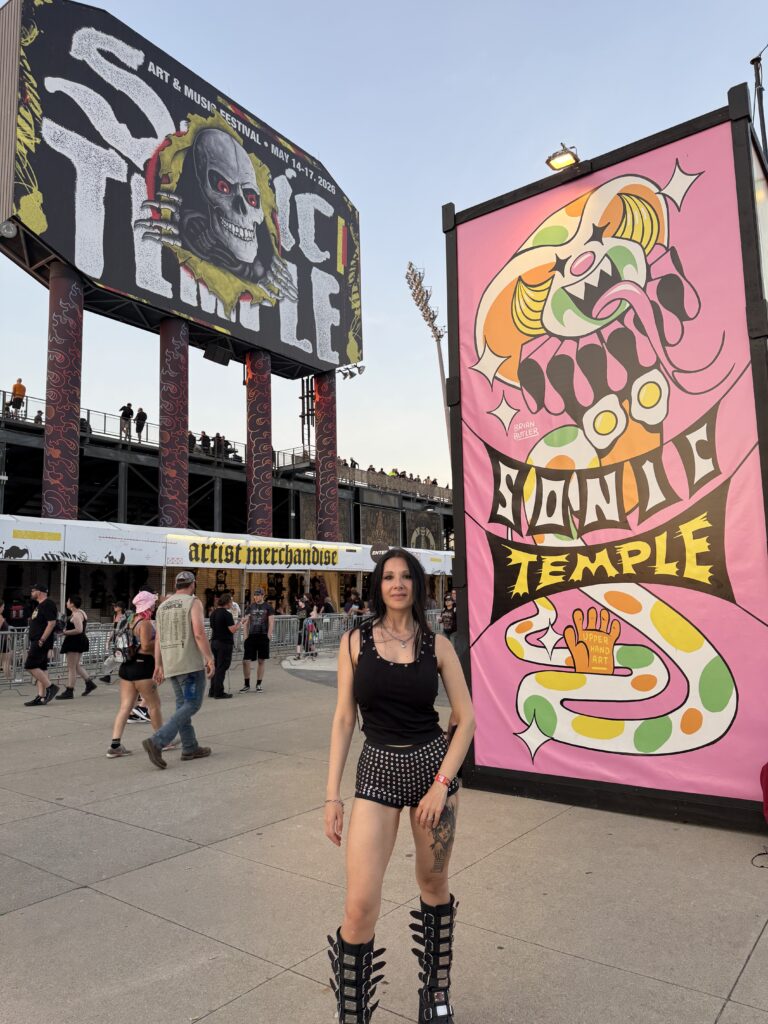
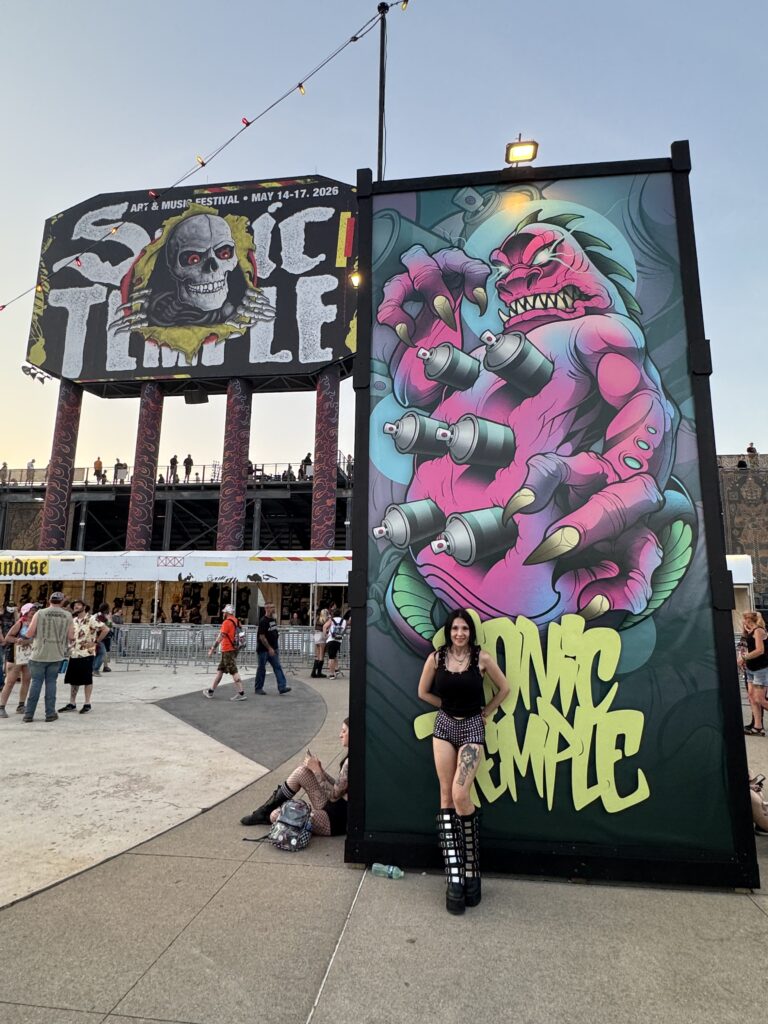
You can see it written on the festival itself. The event is called “Sonic Temple”. Its five stages are “the Temple”, “the Cathedral”, “the Sanctuary”, “the Altar”, and “the Citadel”, names borrowed from the vocabulary of religion. Metal does this constantly. The genre cannot stop reaching for the language of the thing it argues with, and the festival, before anyone has even arrived on the grounds, has already named itself out of that lexicon.
(photo credits: Times Argus)
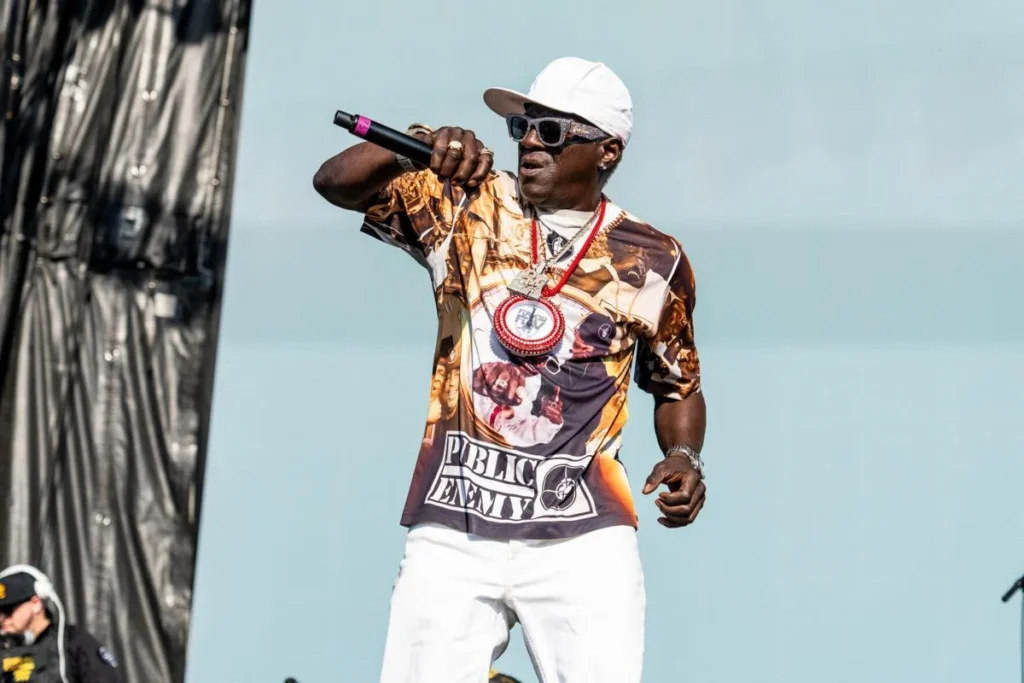
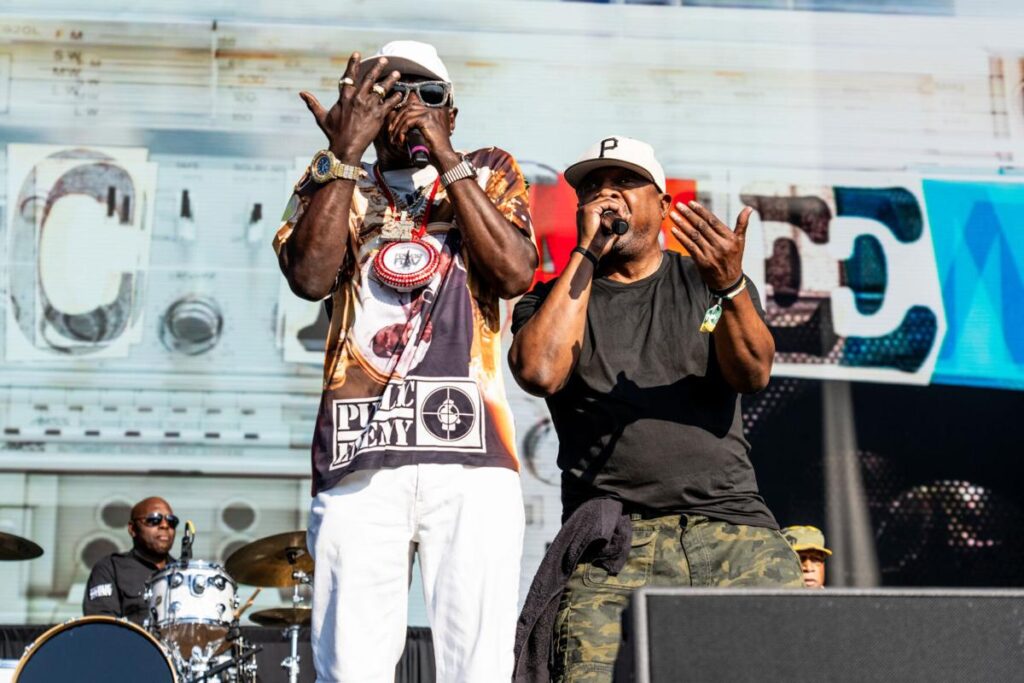
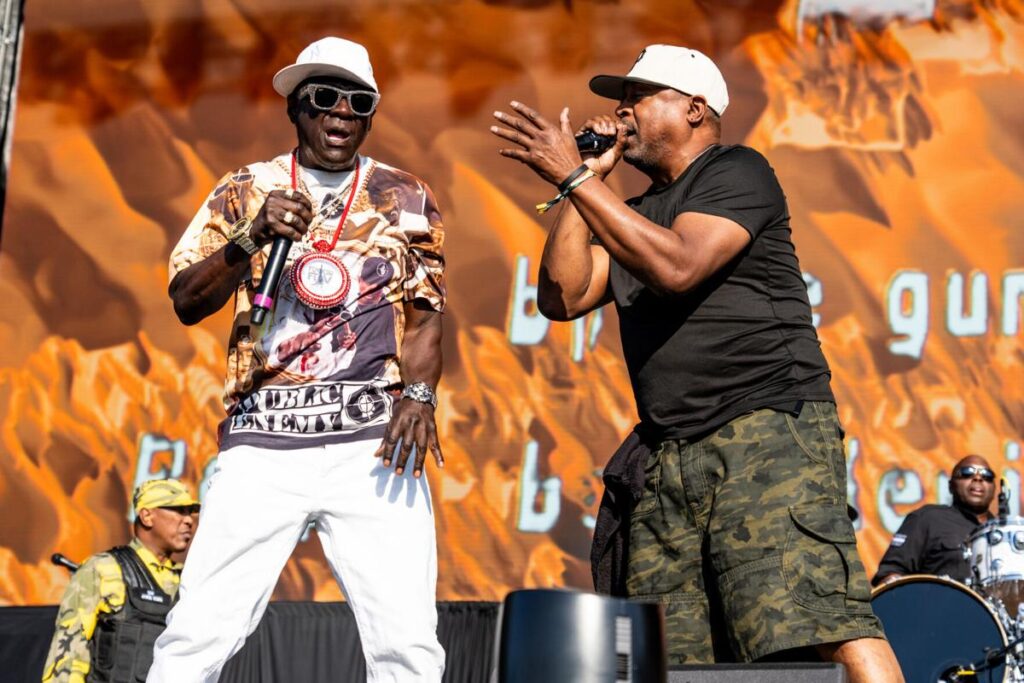
Before any festival I like to do a quick survey of the lyrical themes of every band on the bill, because metal attracts fascinating thinkers and I don’t like to miss any act whose words are worth my attention, even if the sound might not be my immediate preference. One group I had not known well was Public Enemy. I learned that Chuck D, the architect of that band, is one of the most intellectually serious figures in American popular music. He coined the “Black CNN” framing for hip-hop in the late eighties. He has been on the lecture circuit at universities for decades. He has produced docuseries for PBS and the BBC. He is in the Rock and Roll Hall of Fame. He told Pollstar this past March that hip-hop could be operating at a wisdom level instead of a kid level, and that the best MCs carry real wisdom in their bars. He has spent thirty years making that case, and seeing him do it on a metal stage was something I wanted to see.
The set was not metal. I had read about Chuck D and half-expected the show to carry some metal charge in it, the way “Bring the Noise” did with Anthrax in 1991. It did not. It was a straight hip-hop show.
But the thing that felt out of place was God. Between songs, more than once, the audience was steered toward Him.
The voice doing the steering was Flavor Flav, not Chuck D, who barely spoke. “We are all God’s children,” he told the crowd. “The only one who looks out for you is yourself, and God gives you that power.” “We are all the same,” he implored the audience, “no matter what God we study.” And Flav means it. He has said in plain language that he thanks God for letting him survive his own addiction, and that he believes he was kept alive in order to warn other people off the road he nearly died on. It’s not just hype. This is a man’s account of why he is still breathing.
The other founding voice of that band does not relate to God like that at all. Chuck D calls himself an “Earth-izen and a culturist.” He has said he never thought God handed out the world’s religions like cards across a poker table, and that when government and politics and faith roll up into one snowball he goes around it. He has been claiming the title of prophet for nearly forty years. Public Enemy released a song called “Prophets of Rage” in 1988, and Chuck D later carried the name into the supergroup he formed with Tom Morello in 2016. His catalog has spent decades asking whose God a country is actually trusting when it prints the phrase on its money. So on the same stage you have a man thanking God for his life and a few feet away a man treating organized religion as human machination. Public Enemy is not one position on the sacred, but an argument about it happening inside the band.
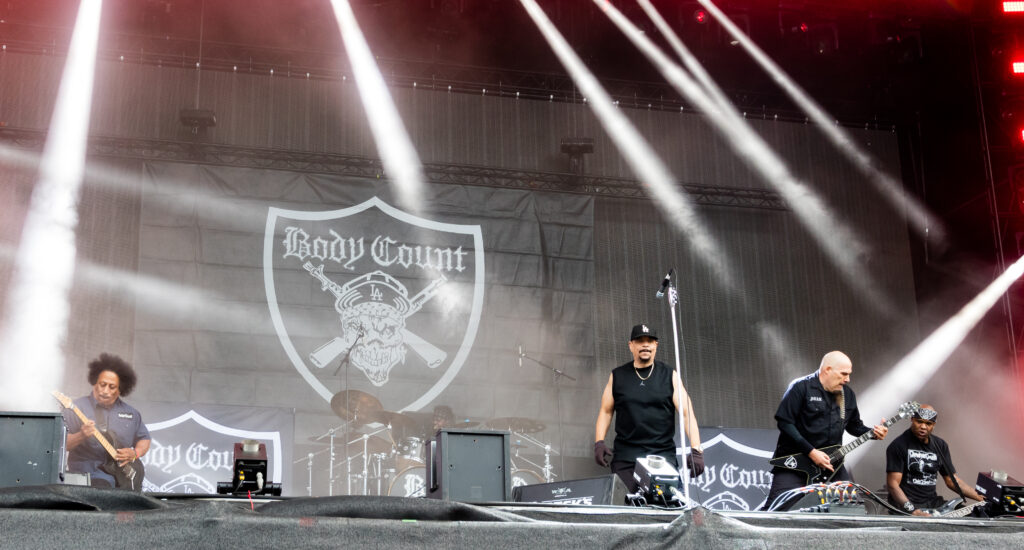
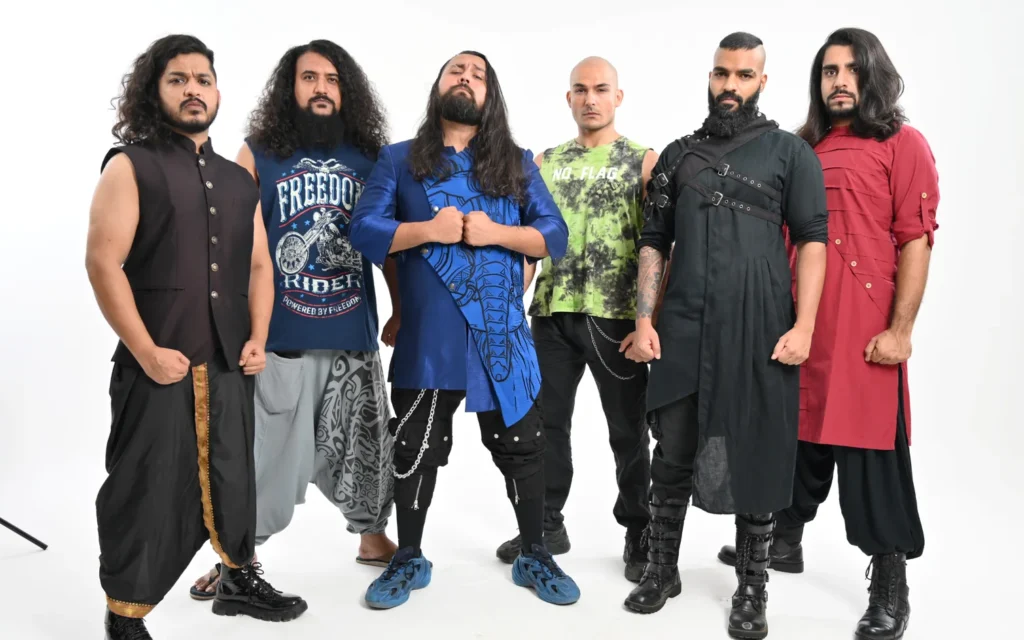
Public Enemy holds an argument. The festival’s two other rap-metal fusion acts each hold a position.
Body Count is a metal band. It started life as a single metal track on Ice-T’s 1991 rap record and grew outward from there. Ice-T chose this. He has said in print that he finds more room to move in metal, that he can go harder there, and that hip-hop went soft on him. His relationship to religion is the one that fits a metal stage most exactly, because he arrived at it in a way similar to how so many other metal artists express their religious doubt. After a car crash doctors told him he would not walk away from, he has said he refused to pray, turned inward instead, and concluded that no religion is more powerful than your own determination. He calls the resulting creed the 1% Nation. This reads to me like a metal worldview, reached independently and then sustained alongside metal.
Bloodywood is another rap-metal fusion on the grounds, a Hindi growl from Jayant Bhadula, an English conscious-rap verse from Raoul Kerr, and a dhol riding over Karan Katiyar’s guitar riffs, with the band’s own label calling Kerr a conscious hip-hop artist. Their relationship to religion is different again. They do not, in public, tell you what any member personally believes. What they do is name what the abuse of belief does. Their song “Gaddaar” is built on a famous monologue from the 1994 Hindi film Krantiveer about politically motivated religious division. The band’s own lyric captures the dynamic: a state turning to faith, faith turning into hate, hate turning into votes. The band has said that in the face of communalism it cannot stay politically neutral. The band is not quarreling with God so much as with the weaponizing of God.
A spectrum here is clear. Set these four against each other by how far each one stands from metal’s basic posture toward the sacred, which is refusal. Ice-T is standing directly on it. Bloodywood is one step off, treating religion as a political hazard rather than a metaphysical one. Chuck D is further out, a skeptic who fights religious power with the instruments of prophecy instead of the instruments of desecration, same enemy as metal but opposite weapon. And Flavor Flav is all the way at the far end, thanking the God the other three argue with. The interesting fact about that spectrum is this. Two of its endpoints, Ice-T and Flav, built their entire philosophies out of the same kind of event, a brush with their own death, and came out the other side believing precise opposites. One decided no one was coming to save him. The other decided someone already had.
None of that is just four biographies. In 2013 a research team led by Viren Swami had four hundred and fourteen people in Britain rate metal and ran the results against personality and belief. Metal fans came out lower than average on religiosity, and the researchers’ own explanation was that the score tracks a wider suspicion of authority, the religious kind included. That is the audience these artists chose to stand in front of.
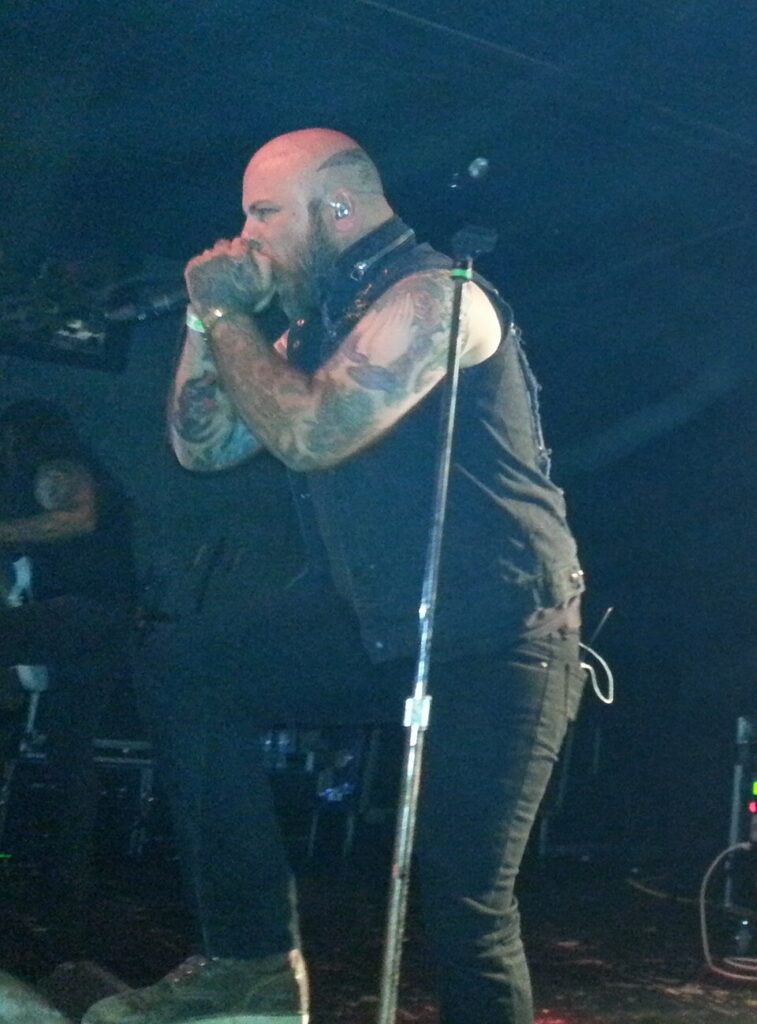

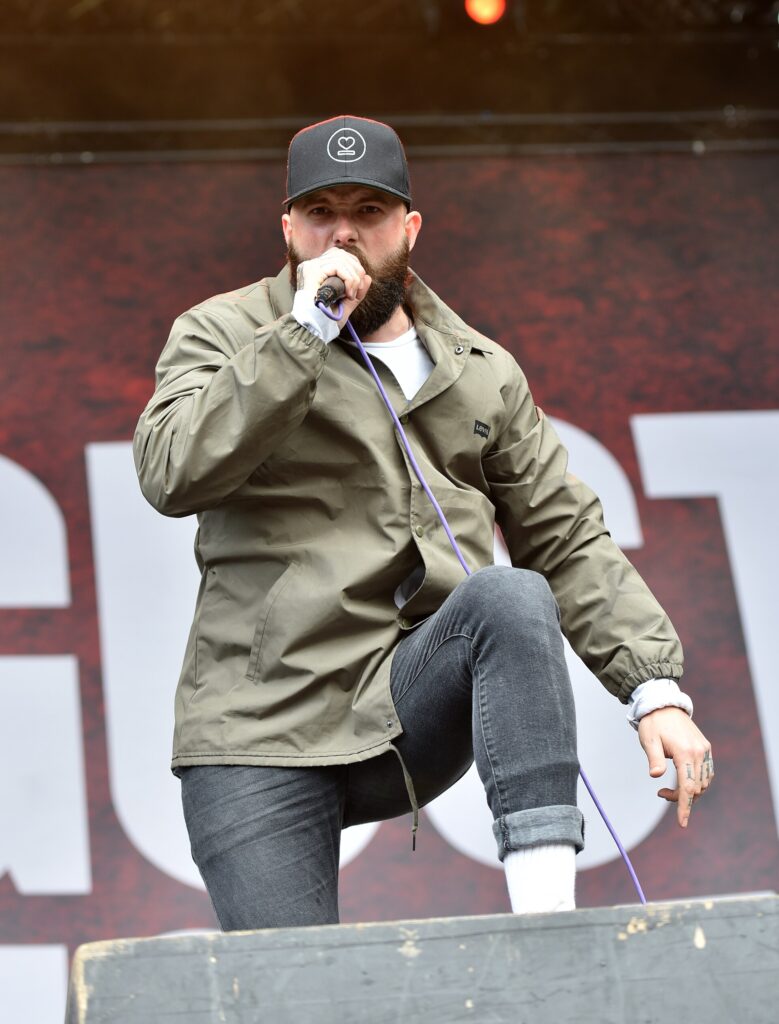
Metal has been arguing with itself about religion for forty years, and the loudest front in that argument has never been the rappers. It has been Christian metal.
In 1985 the Christian glam metal band Stryper, the most commercially successful Christian metal band there has been, broke through with Soldiers Under Command, the first Christian metal album to go gold. The success sat awkwardly with a scene that prized individual defiance and was now being asked to make room for a band evangelizing from the stage. “White metal” was a marketing term coined by Metal Blade Records against the rise of black metal. Christian black metal had to be named by negating black metal itself.
Other entries in the record are the many metal fans who became Christians in the eighties and were rejected by their own churches for being metal. A California pastor founded a fellowship for them with the unimprovable name the Rock and Roll Refuge. This was a people rejected by the scene for their faith and by the faith for their scene.
Look back at this lineup with that history in your hand. Demon Hunter, an openly Christian band that Revolver once filed under a Christian-metalcore banner, played Sunday. Flyleaf played with Lacey Sturm, who is about as discreet regarding her faith as a fire alarm. August Burns Red, Christian, on a Christian label. P.O.D., one of the most commercially successful Christian acts the heavy world has ever produced, on the same stage as everyone else. If you are wondering whether this festival’s Christian bands keep their religion to themselves, they do not. Most of them are a good deal louder about religion than Flavor Flav.
The position the metal scene has held against Christian metal for forty years, that a music built for Christian evangelization is in tension with the genre’s central refusal of religious authority, is persuasive. That is my view. It is an argument. The reason for restraint is not squeamishness. It is the same reason metal’s relationship to non-belief is what it is in the first place. Compared with how the faiths themselves spread across the world, non-belief has made nearly all of its ground through argument and education rather than through force. Where it was imposed by the state, in the old Soviet bloc, it did not hold, and religion won back gains in the void after the boot came off. A position that wins by discourse does not get to abandon discourse the second discourse becomes inconvenient.
There is a real question underneath all of this that I am not going to answer with a feeling. The Metal Intellectualist Survey which I ran at this festival will have its own say. The analysis is coming, and you will get it here. My honest preliminary impression, formed standing in those crowds with a clipboard in my hand, is that Sonic Temple is a more Christianized space than most festivals that call themselves metal, and that this, more than one rap set, may be the real answer to the question I opened with. But an impression is not data. You will get the data, not the impression.
Apart from whatever the data will tell us, a question I find myself with remains straightforward. Do I want Demon Hunter, Flyleaf, August Burns Red, and P.O.D. at Sonic Temple? Do I want Public Enemy and Body Count on the same bill?
My answer is still yes, and the reason has more than one piece to it.
The first piece is the big tent. I said earlier that I want metal to spread, and I meant it. A festival that books only what is unambiguously metal by the most demanding fan’s definition is a festival that does not grow.
The second piece is a theory. I think Christian metal may, on balance, push fans away from Christianity rather than toward it, and the reason it can keep going as a commercial scene is not that this is wrong but that the scene gets replenished, each year, with new young Christian fans entering as older fans drift somewhere else. That is the actual demographic shape of religion in the developed world. More people raised religious become non-religious than the reverse, while the institutions persist by recruiting at the front gate. Christian metal would not be an exception to that pattern. It would be an instance of it.
The mechanism does not need to be anything cinematic. Most music fans are not watching for theology. A lot of people who like August Burns Red probably could not tell you that the band’s members are devout. They came for the breakdowns. The fan brought into a metal scene by the only Christian act they care about then finds themselves in a space with a devastating undercurrent running in the other direction. Exposure does its quiet work. Flyleaf played the same day as Behemoth. The Flyleaf fan who happens to catch ten minutes of Behemoth on a nearby stage witnesses a trance they would otherwise probably have never been exposed to, whereas the Behemoth fan who happens to catch ten minutes of Flyleaf finds something all of us have seen and heard before. The asymmetry of pull is metal’s own unique gravity at work.
What I know without the data is what I came back from this festival convinced of. The bridge between rap and metal does not, on its own, confer seriousness on anybody. The same poster that carried Public Enemy and Body Count also carried Electric Callboy, who are a joke by design and very good at it, and a nostalgia slot for Saliva. Crossing into metal makes nothing of you. That is exactly why it matters that the serious ones keep doing it on purpose. Chuck D brought thirty years of insisting hip-hop can carry real wisdom onto a metal stage. Ice-T set down the more lucrative career to be there. Bloodywood named their tour Raj Against The Machine, after the band Tom Morello was supposed to be standing on this bill with before he left to go play guitar for Bruce Springsteen, because the people who built this road never stop walking.
So, is Sonic Temple metal? It is the wrong question in an interesting way. The genre’s deeper question has never been about who is allowed through the gate. It has been about God, for forty years, at volume, and the argument is wide enough to hold Chuck D and Ice-T and Bloodywood and Demon Hunter inside the same fence, all of them disagreeing with each other in the open. That argument, not any guitar tone, is, in my humble opinion, the most metal thing on the grounds.
The data is coming.
2 thoughts on “Sonic Temple, Is it Metal?, Christianity, and the Rap Artists Who Chose Us”
Very good
hlw