
French black metal pioneers Seth have spectacular lyrics, but I have a little bone to pick with them.
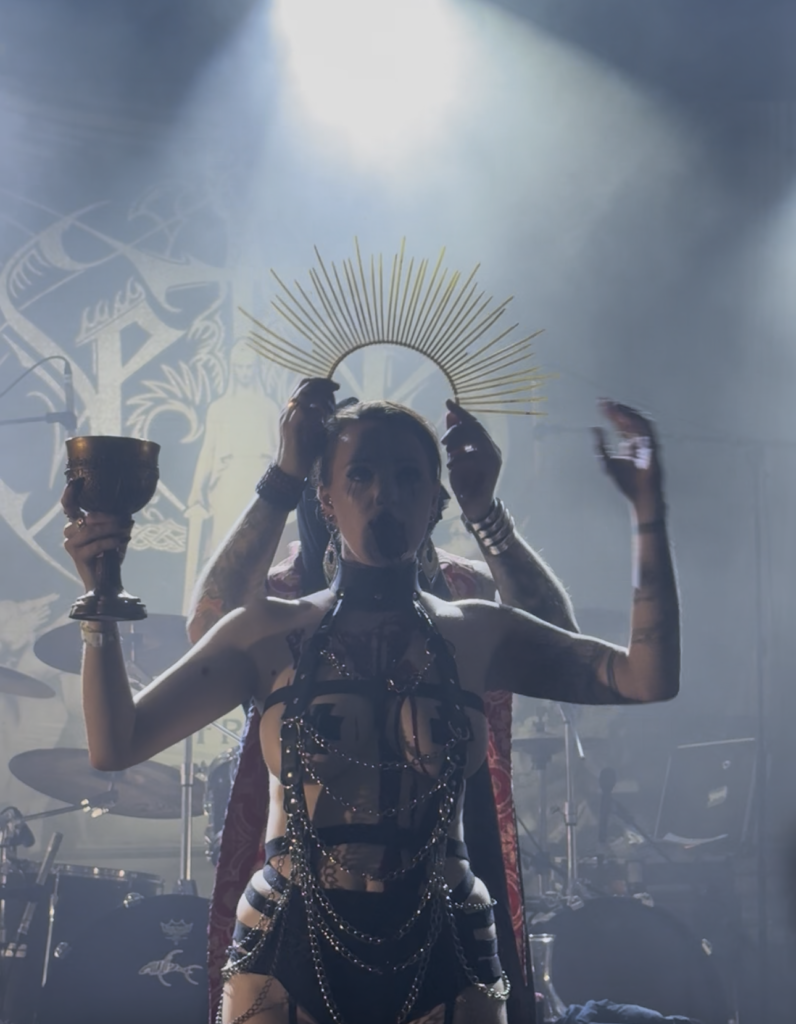
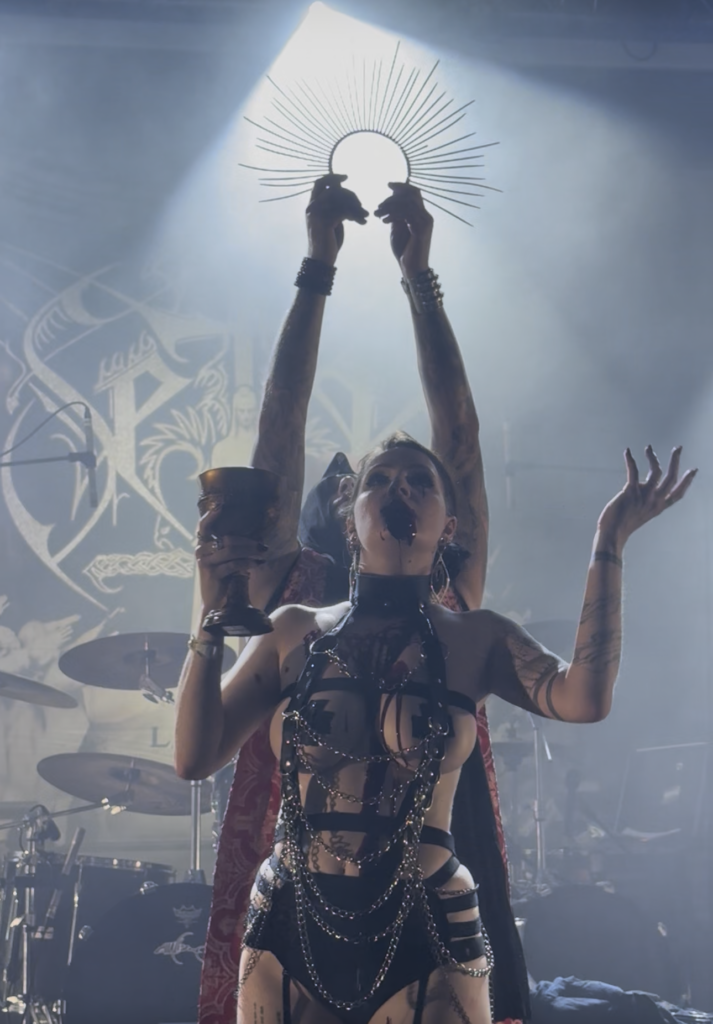
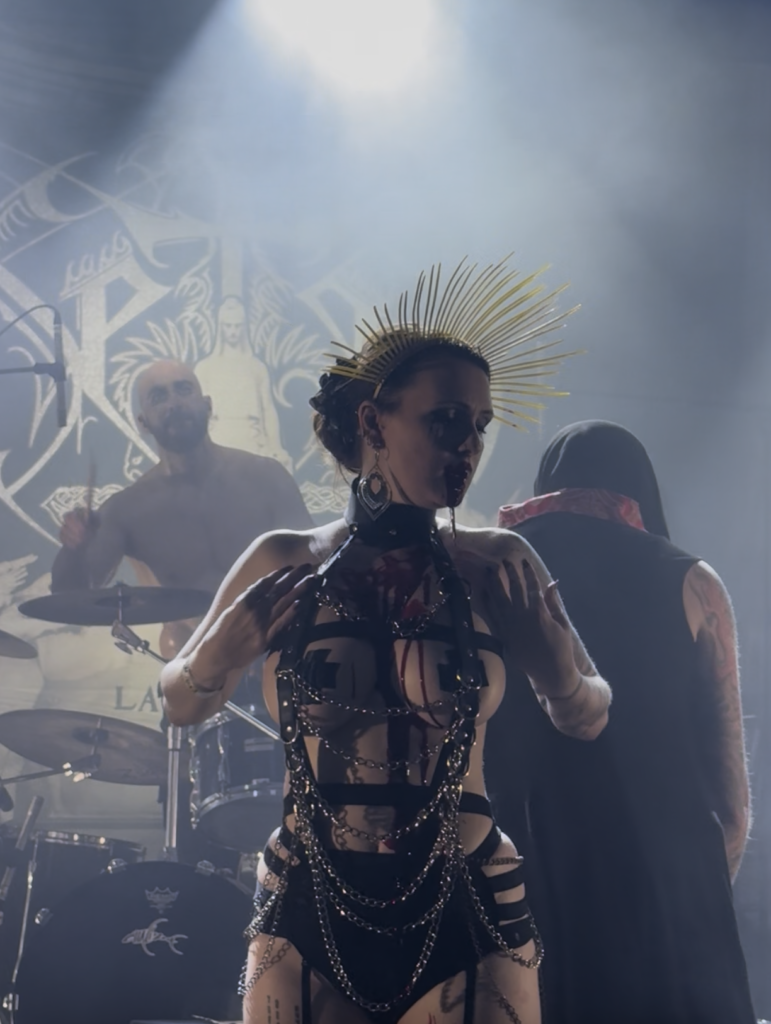
In Montagny, south of Lyon, on the closing night of the Lions Metal Festival on 24 May 2026, Seth opened for Primordial with a set drawn almost entirely from their two most recent records — La Morsure du Christ and La France des Maudits. It was my second time seeing the lyrically French band play in France. I had caught them on the Pro Xristou Tour in Seyssinet-Pariset, a suburb of Grenoble, opening for Rotting Christ and Borknagar. I have also seen Seth play for another kind of French audience, at Messe des Morts in Montreal in November 2023, where they played a special combined set from their classic debut album and their latest inside a deconsecrated Catholic church. There is a visceral energy, a detectable pride, that fills the room when this band screams French history in French for the French.
However tight their live performances are, however fitting or fit the naked nuns accompanying them on stage may be, most of what makes this band interesting lives in the lyrics, in the print, in the alexandrines, in the album titles, in the source texts, in the choice of release date. Seth might be doing just about as much intellectual work as anyone in metal, and a forty-minute live set is not really the medium for unpacking all of it to a live audience. The non-dits — the things they leave unsaid — are best unpacked in writing.
The two most recent Seth albums are concept records bound by classical French poetic form. La Morsure du Christ (2021) is a meditation on the 2019 Notre-Dame fire as the death certificate of Christian Europe; the title track opens with a Satanic Eucharist — “Prenez, buvez en tous, car ceci est le sang,” take, drink ye all of it, for this is the blood — and the album moves through Sacrifice de Sang, which invokes “Œuvre au Rouge, descends!”, the alchemical Great Work descending into the world. La France des Maudits (2024) is a concept record about the French Revolution, read as Satanic defiance of theocratic order. It opens with Paris des Maléfices, subtitled “Ode à Baudelaire,” with the famous Baudelaire line “tu m’as donné ta boue et j’en ai fait de l’or” — “you gave me your mud, and I made gold from it” — worked into the lyrics in the third person. The album’s central interlude is named Marianne, after the personification of the French Republic. The bonus track is a cover of “Initials B.B.”, Serge Gainsbourg’s 1968 pop standard for Brigitte Bardot, imported into a Revolution-era concept record as a nod to twentieth-century French popular culture. The album was released on 14 July — Bastille Day — and the whole thing is written in alexandrines, the twelve-syllable line of seventeenth-century French tragedy and nineteenth-century French Symbolism. Racine, Corneille, Hugo, Baudelaire, Rimbaud. The highest register of French verse, set to black metal.
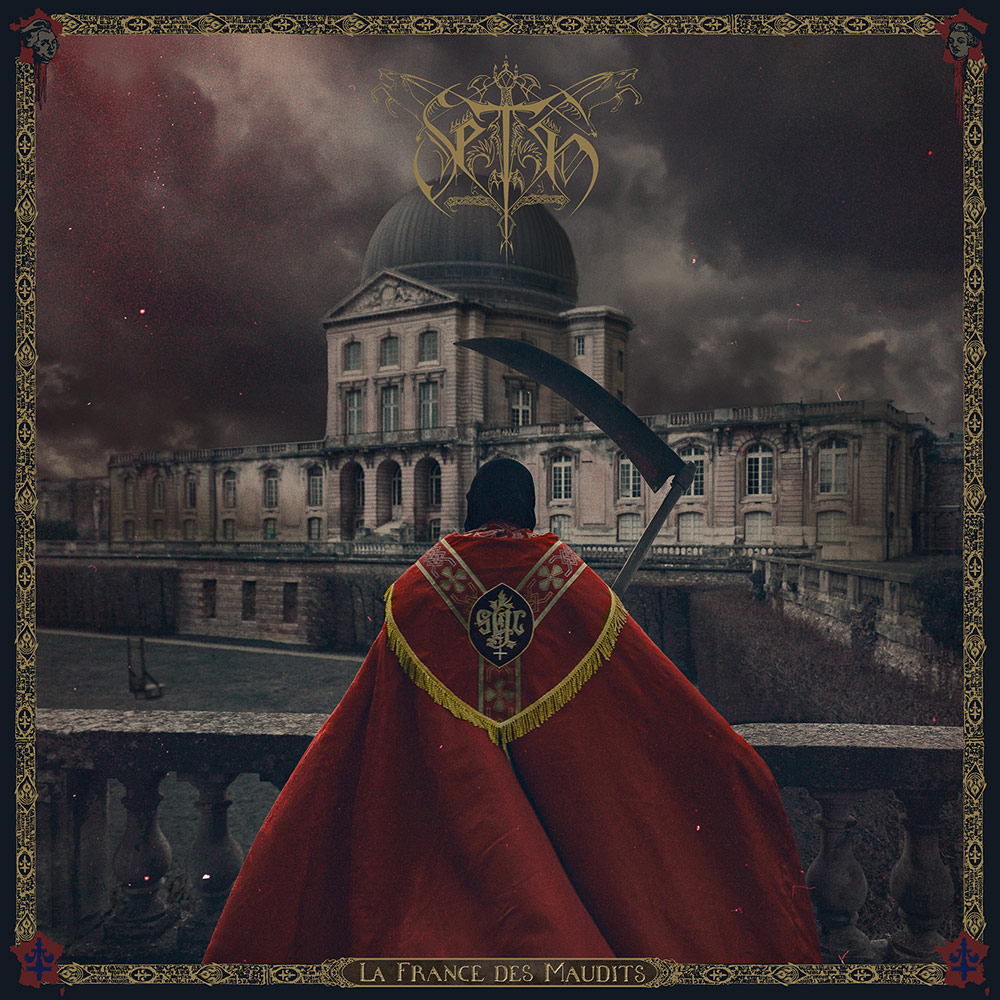
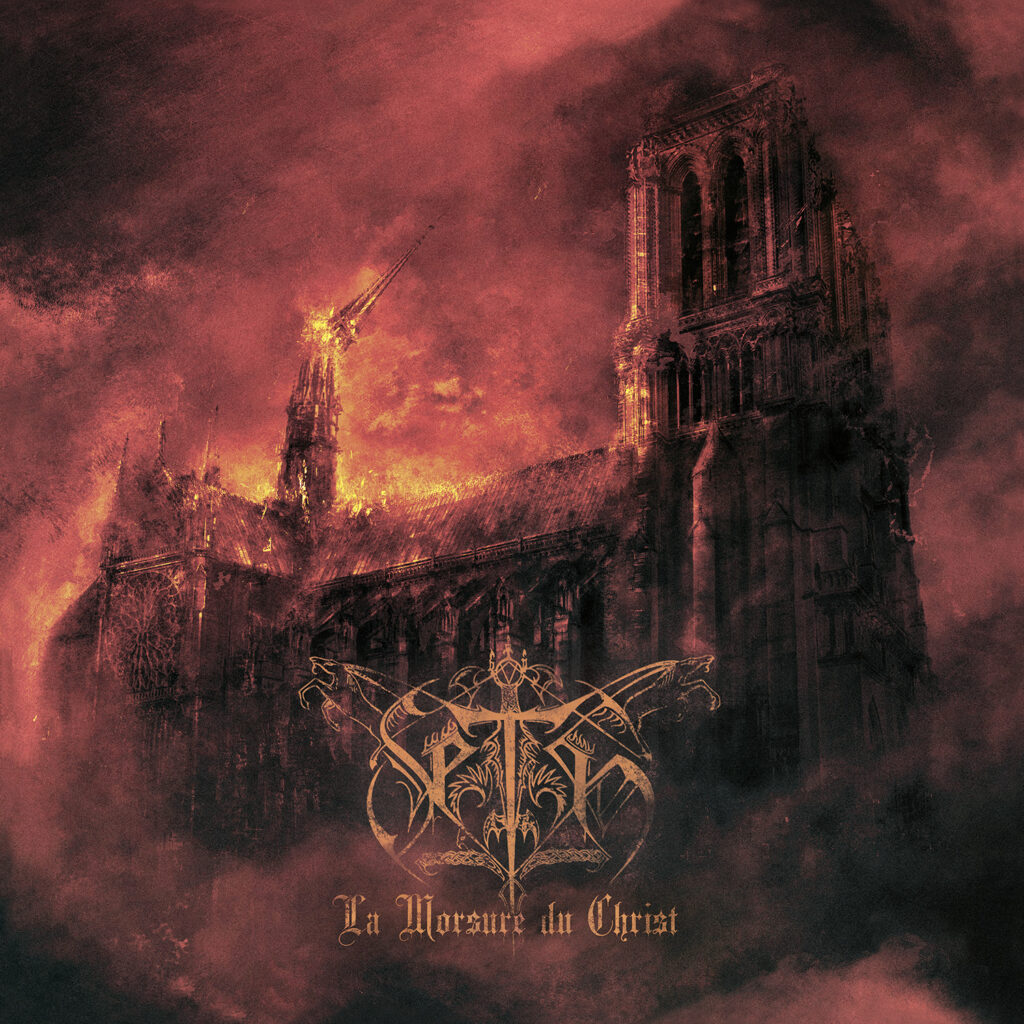
It is not meant to be subtle, nor is it unsupported. It rests on a tradition European intellectual history, so often centered in France, built over the course of centuries.
As much as there is no contest that Norway holds the popular title of “most black metal nation,” if we want to be historical about it, deeply historical, strictly speaking, there is no contest. France wins.
Start with the Revolution. On 21 January 1793, at ten in the morning, a former king named Louis Capet rode in a carriage through Paris to a public square between the Champs-Élysées and the Tuileries, climbed a wooden scaffold in front of about a hundred thousand people, said “I die innocent,” and was beheaded by guillotine. The crowd sang the Marseillaise. Spectators pressed forward to dip their handkerchiefs in his blood and kept them as souvenirs. For the first time in a thousand years, France was not ruled by a monarch. The doctrine of divine-right kingship — the theological claim that the king sat on his throne as God’s appointed representative on earth — had been ended in public, by his own people, with a blade. Ten months later, on 10 November 1793, the Cult of Reason occupied Notre-Dame de Paris, the same cathedral Seth’s recent masterpiece depicts aflame. A young woman, sometimes identified as Sophie Momoro, was enthroned in the cathedral as the Goddess of Reason; “To Philosophy” was carved above the doors; the revolutionary calendar tried to delete the Christian week from the year. A century later, in 1905, France made laïcité a constitutional commitment that is still the spine of French public life. When Seth release a record on Bastille Day and put an instrumental called Marianne at its center, this is the archive they are drawing from. They have the receipts.Then the literary inheritance. Charles Baudelaire was a Parisian poet who in 1857 published Les Fleurs du Mal, a single volume that did more to bend the moral self-image of nineteenth-century Europe than any other book of poems in that century. Within weeks of publication he was prosecuted by the French state for outrages to public morality; six poems were banned by court order. One that survived was Les Litanies de Satan, a parody of Christian invocation that consecrates the Devil as the friend of the wretched. Baudelaire established the figure of the poète maudit — the cursed poet — as a permanent French literary inheritance. In 1884, Paul Verlaine named the canon in Les Poètes Maudits — Tristan Corbière, Stéphane Mallarmé, and chief among them Arthur Rimbaud, whose Une Saison en Enfer (1873) is one long lyric crucifixion of Christian morality. In 1891, Joris-Karl Huysmans serialized Là-Bas in L’Écho de Paris, drawing on the testimony of a defrocked Catholic priest named Joseph-Antoine Boullan in Lyons to produce the most famous literary description of a Black Mass in any language. Reader outrage was such that the novel was banned from sale at French railway kiosks. Saint Vincent has Baudelaire on every record — the Litanies echoing in Le Triomphe de Lucifer on La Morsure du Christ, the boue et l’or line embedded in Paris des Maléfices. The album title La France des Maudits rhymes with Verlaine. The alexandrines run alongside Racine and Hugo. None of this is decoration. It is genealogy.
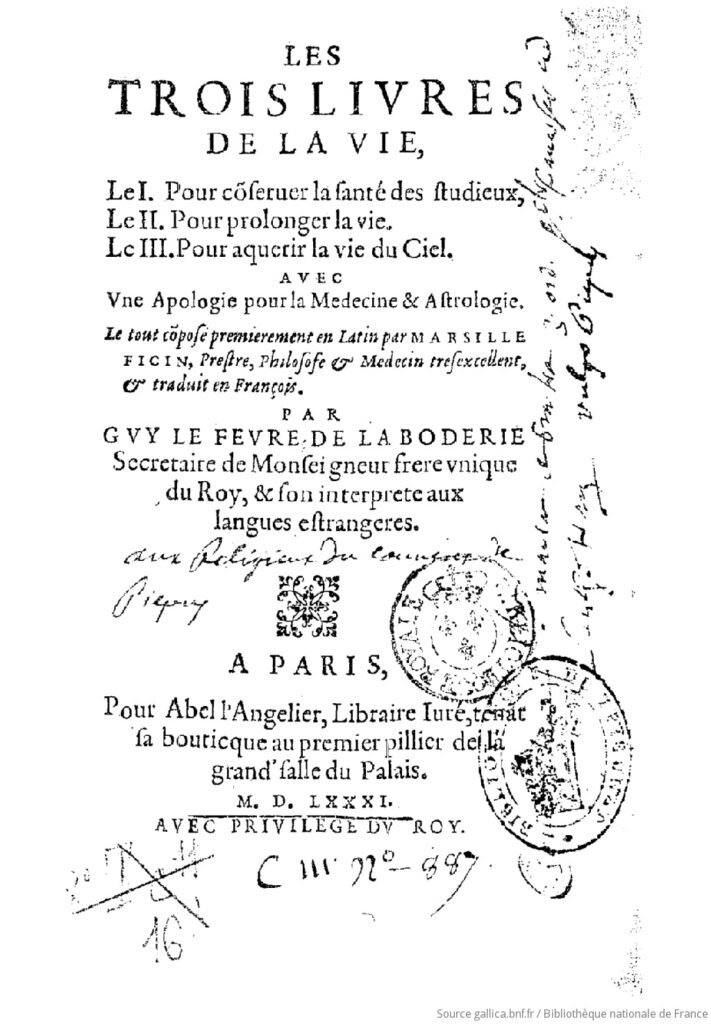
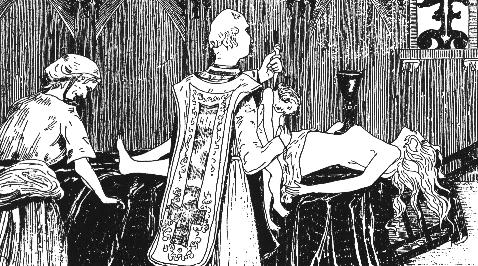
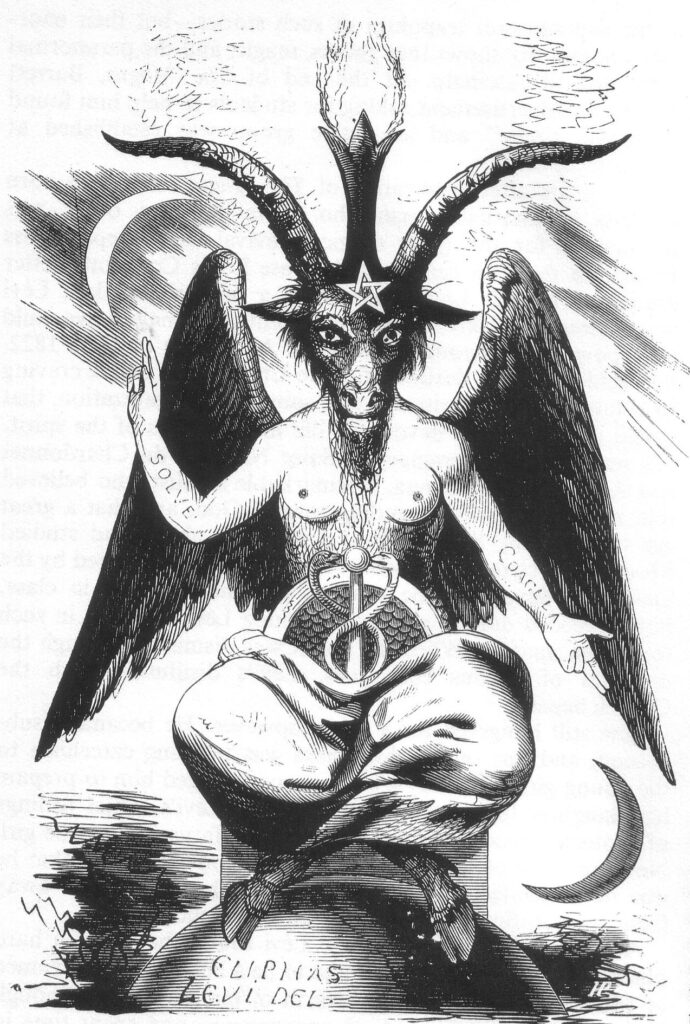
And then the occult and ritualistic line. In October 1307, King Philip IV of France ordered the simultaneous arrest of every Knight Templar in his kingdom, charging the order with heresy, idolatry, denying Christ, and worshipping an idol the trial transcripts called Baphomet — the name entering the historical record there, in confessions extracted under torture. Five years of trials ended in suppression of the order in 1312; in 1314 the Grand Master, Jacques de Molay, was burned at the stake in Paris. In 1582, a Christian Hebraist and Kabbalist named Guy Lefèvre de la Boderie published in Paris the first complete vernacular translation in any language of Marsilio Ficino’s De vita libri tres, the foundational text of Renaissance learned magic — a complete vernacular version Italian-speaking readers in Ficino’s own country never received in the entire early modern period, waiting until 1701 for an anonymous Milanese edition of the actively magical third book. France had domesticated the most consequential Renaissance treatise on occult medicine, astral magic and demonology into a living vernacular tradition while the Italians left unreadable to the public in Latin. A century after Lefèvre de la Boderie, the Affair of the Poisons (1677–1682) tore through the court of Louis XIV: a special tribunal called the Chambre Ardente investigated allegations that a Catholic abbé named Étienne Guibourg had been celebrating Black Masses for Madame de Montespan, the king’s mistress, with Montespan reportedly serving as the naked altar, the rites including child sacrifice. The charges came from testimony under torture; the historical truth of the more lurid details is contested, but the political truth is not. La Voisin, the principal witch, was burned at the stake in 1680. Louis XIV sealed the records when the trail reached too high. Two centuries later, in 1856, a former Catholic deacon named Alphonse-Louis Constant — writing under the magus-name Éliphas Lévi — published volume two of Dogme et rituel de la haute magie with a frontispiece he had drawn himself: a horned, winged, androgynous Baphomet of Mendes. That single drawing is the source of every Baphomet image to follow — the Church of Satan’s Sigil of Baphomet (1969), the Satanic Temple’s statue, and tattoos and album covers on a thousand metal bands worldwide. When Seth invoke “Œuvre au Rouge” on Sacrifice de Sang and stage ritual nudity at Lions Fest and naked nuns inside a deconsecrated Catholic church in Montreal, this is the tradition they are operating in. Not pop nudity, which is just about sex but occult-ritual nudity, which is also about transgression, consecration, and inversion of the Christian sacred. It earns every right to share the stage with sophisticated artists.
Other anti-Christian-coded metal scenes have built scene-level identity infrastructure that does much of the heritage work for them. Hellenic Black Metal is a marketed brand — capital letters not a joke — blazoned on the back of T-shirts by Rotting Christ, and I saw one in the pit at Lions Fest before Seth played, even though Rotting Christ were not on the bill. Norwegian black metal has gone in thirty years from anti-cultural arson to officially exported cultural heritage, with Music Norway, the state-funded export agency, now treating the genre as a flagship industry. The scene-brand carries the heritage; the audience receives the music with the identity infrastructure already in place. A kid in Athens can walk into a venue wearing a Rotting Christ shirt and inherit an entire scene-identity before the headliner has taken the stage.
France has nothing equivalent at scene level. Individual French black metal bands have plenty of band-level commodification, but no umbrella brand for the French scene as a cultural-historical inheritance compares. Part of the reason is that the corner of the French scene which flies the patriotic flag most loudly strikes many metalheads as poisonous — Peste Noire is the most controversial case, with similar complications alleged around members of the Deathspell Omega conclave, even if not necessarily French members. This might be part of what makes “French pride” framing something some bands have chosen to step around carefully. In any case, French black metal lacks the scene-level scaffolding that Scandinavian scenes take for granted. Seth, working at the very top of the genre in lyrical depth and intellectual seriousness, is doing the work with a regretfully shorter array of compatriot colleagues and international fans.

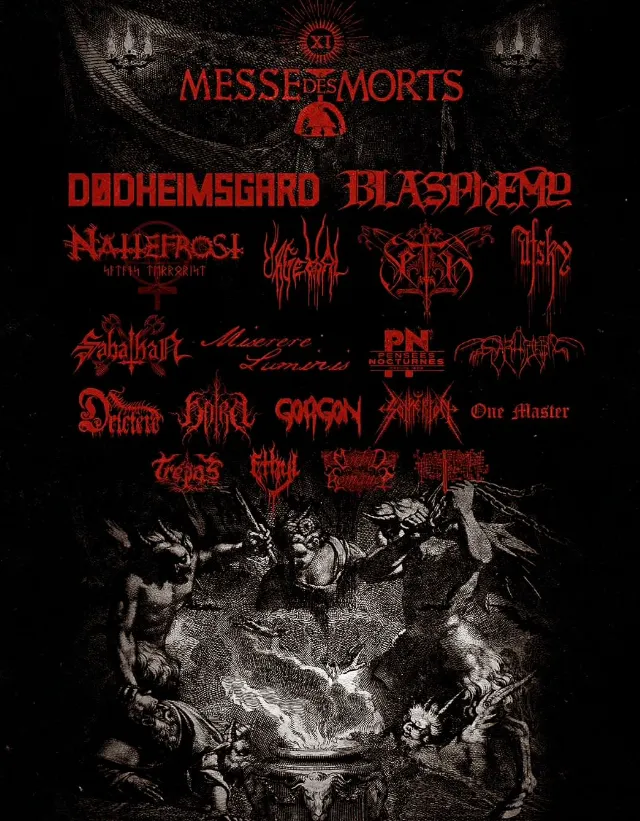
You can see what the difference looks like when more scene scaffolding is in place. At Messe des Morts in November 2023, Seth played their combined set inside the Théâtre Paradoxe, a deconsecrated Catholic church on boulevard Monk — the former Saint-Paul Church. Saint Vincent has called the event “incroyable, dans une église.” The cover of the 2019 live album Les Blessures de l’Âme: XX Ans de Blasphème is a photograph from an earlier Seth performance in that same Montreal church, not from any French venue. Messe des Morts’ own promotional copy is explicit that an earlier appearance at the festival inspired La Morsure du Christ — “the band released, in 2021, its spiritual successor.”
The Montreal scaffolding is built. Métal Noir Québécois is an explicit, marketed scene identity, the term taken from a 2006 Forteresse album of the same name and the umbrella since covering Sorcier des Glaces, Monarque, Sombres Forêts, Gris, Délétère, Csejthe and many beyond. The bands release through Sepulchral Productions, showcase at Messe des Morts, and write about Quebec history, Quebec winter, and Quebec Catholicism rejected. They have a historical anchor in the 1960s Quiet Revolution, when Quebec broke the Catholic Church’s grip on its public institutions inside a single decade.
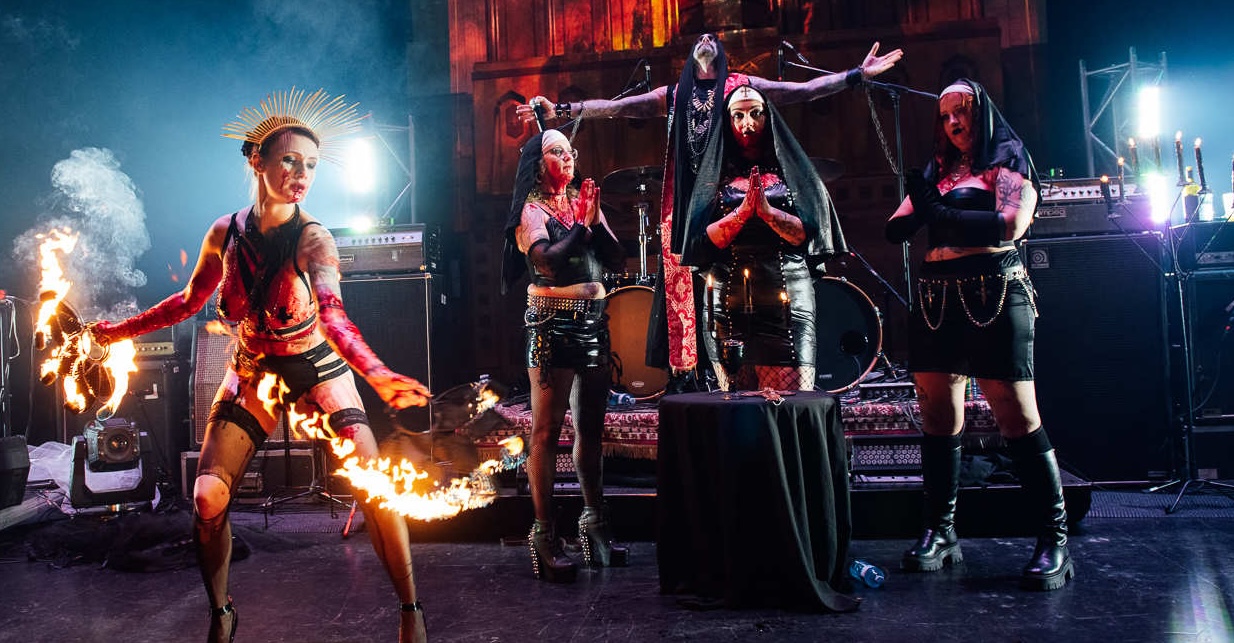
When Seth played that audience in that venue, half of the cultural work was done for them. The room and the people in it were the argument.
In France, Seth has less immediate scaffolding to lean on. No scene-brand backing them, no umbrella label, no festival operating as the philosophical home of the scene heading into its twelfth edition. Seth’s records and live performances need to do more of the lifting on their own.
My little bone, then, is this. If there is space between songs for ritual nudity, and I’m not saying there shouldn’t be, why not also eke out some live-performance space for some of that most eloquent articulation we hear from Seth in their interviews concerning the grandeur of French history and how the black metal art form under their craftsmanship brings that history to bear. A significant number in their audience will absorb it with intense interest, and those who won’t, they already got naked nuns, so goodwill is secure. Even a few short references would land with intrigue, because few bands boast a historical catalogue of lyrical themes so much worth talking about.
1 thought on “Seth’s “France des Non-Dits” at Lions Fest and on the Pro Xristou Tour”
good